

01 May 2025
Scholars Highlight Promise and Risks of Generative AI in Islamic Inheritance Law
An academic study examining the use of generative artificial intelligence in Islamic inheritance law has found that they require significant human oversight.
The research, published on the Islamic Law Blog by legal scholar M. Zubair Abbasi, evaluated leading AI systems including ChatGPT-4, Gemini, Co-Pilot, and DeepSeek in handling complex inheritance questions rooted in both Sunnī and Shīʿī jurisprudence.
The study focused on how effectively large language models (LLMs) could interpret and apply Islamic inheritance rules across different legal jurisdictions such as Pakistan, Egypt, and Iran. Researchers tested the systems using scenarios ranging from basic inheritance calculations to more complex legal disputes involving orphaned grandchildren and modern state reforms.
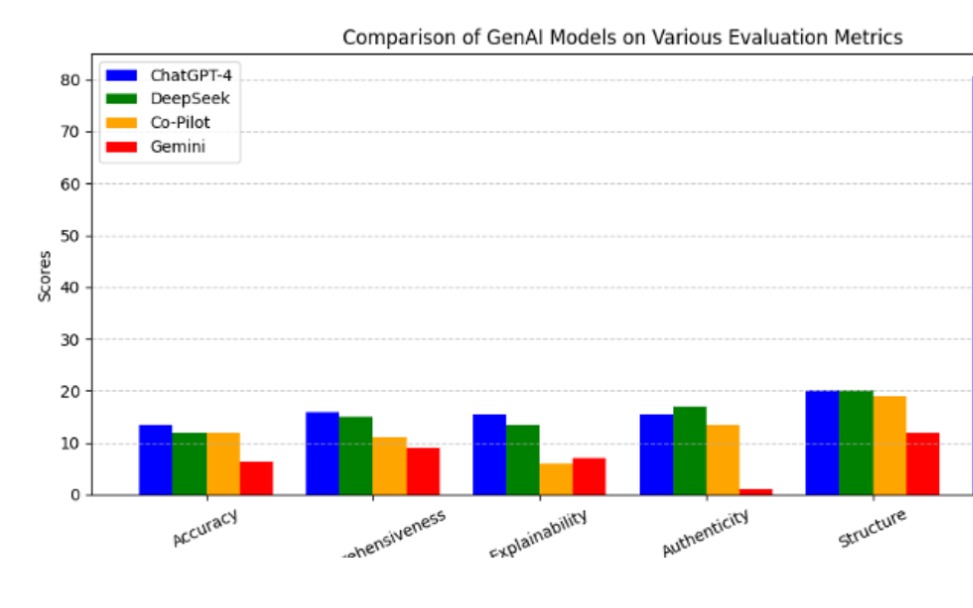
According to the findings, ChatGPT-4 achieved the highest performance score at 80.5 percent, followed closely by DeepSeek at 77.5 percent. However, all systems showed declining performance as legal questions became more nuanced and jurisdiction-specific.
The paper noted that AI systems frequently produced incorrect legal interpretations or fabricated references, particularly when dealing with modern legislative reforms. In one example, ChatGPT-4 reportedly cited the wrong Egyptian inheritance statute while incorrectly explaining inheritance rights in Pakistan under the Muslim Family Laws Ordinance 1961.
To assess the systems, Abbasi developed a framework called the GenAI Evaluation Scale (GAIES), measuring accuracy, comprehensiveness, explainability, authenticity of references, and structure of information. While the AI models scored well in organizing information and presenting structured responses, accuracy remained their weakest area.
The research also explored Google’s NotebookLM, which demonstrated stronger citation reliability because it generated responses based only on uploaded source materials. Although the tool achieved high accuracy in certain tests, researchers said it still lacked the ability to provide fully comprehensive legal analysis.
Abbasi proposed a second framework known as the GenAI Application Scale (GAIAS), aimed at guiding ethical AI use in Islamic legal education and research. The scale outlines when AI can be safely used as a research assistant and when it should be avoided entirely, especially in areas involving sensitive religious interpretation or legal judgment.
The study arrives amid growing global debate about the role of artificial intelligence in religion and legal scholarship. Online discussions among Muslim technology communities have reflected both optimism and concern over AI-generated Islamic guidance, with some users praising its research capabilities while others warning about misinformation and fabricated religious rulings.
Despite the shortcomings, the study concludes that generative AI could still become a transformative tool in Islamic legal education and comparative legal research if implemented responsibly. Researchers suggested that future AI systems trained specifically on authenticated Islamic legal databases and supervised by qualified scholars may significantly improve reliability.
The study also called for greater collaboration between AI developers, Islamic jurists, and legal academics to ensure future systems better reflect the diversity and complexity of Islamic jurisprudence while minimizing misinformation risks.
Similar news



Comments
0 Comment
Most visited news

Latest articles
Contact us

All rights are reserved for the Center of Contemporary Jurisprudence, Islamic Seminary - Iran - Copyright
۰ Comment