
16 Aug 2026
what happened in the 40th Islamic Unity Conference
The 40th Islamic Unity Conference opened in Tehran with calls for Muslim unity, regional cooperation and dialogue among Islamic schools of thought.
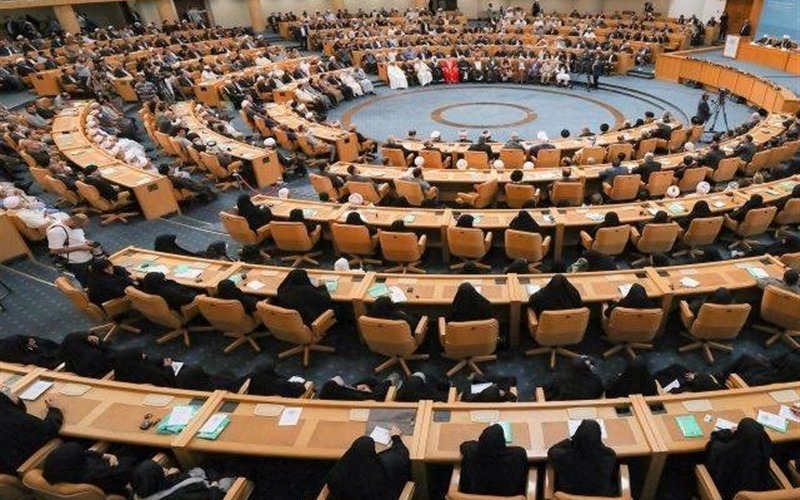
The 40th International Islamic Unity Conference opened in Tehran with the participation of Iran’s president, prominent scholars from the Muslim world and nearly 600 domestic and international guests.
The opening ceremony was held at the Summit Conference Hall, with representatives from countries including Iraq, Pakistan, Türkiye, Lebanon, Afghanistan and the Gulf states, as well as ambassadors based in Tehran and representatives of senior religious authorities.
Hamid Shahriari, secretary-general of the World Forum for Proximity of Islamic Schools of Thought, welcomed President Masoud Pezeshkian and the conference’s local and foreign participants. He also congratulated attendees on the birth anniversaries of Prophet Muhammad and Imam Ja’far al-Sadiq.
Shahriari: The Gaza War Has Highlighted the Need for Unity
In his address, Shahriari referred to developments over the past year and described the recent conflict involving Iran as a major historical event. He argued that the conflict reflected a broader confrontation over regional power and unilateralism, adding that a stronger Iran could serve as a model for Muslim and developing countries.
Shahriari said that Iran’s nuclear energy program, missile capabilities, infrastructure, scientific resources and institutional strength had been among the issues targeted by its opponents. He also argued that the country’s resistance had enabled it to strengthen its regional position despite years of pressure.
Referring to the reported deaths of students and teachers at the Shajareh-Tayyebeh School in Minab, he questioned what benefit, in his view, could be gained from violence against civilians. He also criticized what he described as the silence of Western media over the incident.
Shahriari characterized the conflict as more than a dispute over national identity or regional stability, calling it a civilizational confrontation. He said that recent regional developments had increased awareness among Muslim countries that regional security should be pursued through cooperation among the countries of the region.
He further said that the discourse of rapprochement and unity had gained strength over sectarian division. Referring to the 40th anniversary of the conference, Shahriari called for greater cooperation among Islamic countries and said that a new Islamic civilization could emerge through collective efforts.
Message from Ayatollah Nouri Hamedani
A message from Ayatollah Hossein Nouri Hamedani was read at the opening ceremony by Hojatoleslam Modarresi Yazdi.
In the message, Nouri Hamedani emphasized the importance of unity and rapprochement among Islamic schools of thought, particularly amid ongoing conflicts and political tensions in the Muslim world. He said that unity did not require Muslims to abandon their theological or jurisprudential principles, stressing that scholarly differences should remain within academic and research settings and should not lead to conflict, excommunication or violence.
He described cooperation among Muslim governments and societies as a shared necessity, arguing that the security and dignity of Islamic countries could not be separated from one another. He also called on Muslim scholars, seminaries and universities to promote dialogue, public awareness and cooperation, while preventing religious differences from becoming tools of division.
The message urged participants to focus on practical mechanisms for cooperation among governments, communities and academic and religious institutions across the Muslim world.
Speakers Call for Greater Cooperation
Sheikh Saleh bin Hamouda, Niger’s minister for the restoration of culture and social values, said that the Quran repeatedly emphasizes unity among Muslims. He called on Muslims to cooperate beyond differences of ethnicity, nationality and religious affiliation.
Sheikh Ali al-Khatib, deputy head of Lebanon’s Supreme Islamic Shiite Council, said that the Muslim world was facing major civilizational challenges. He argued that greater unity had contributed to Iran’s ability to withstand pressure and called for constructive dialogue and joint action among Islamic countries.
Mahmoud Arul Kilic, a professor of Islamic Sufism from Türkiye, said that divisions within the Muslim world had contributed to conflict and violence. He called for peace, tolerance and dialogue among Islamic schools of thought, as well as wider efforts to promote Islamic studies through international institutions.
Decentralized Format and Special Programs
According to the conference secretariat, this year’s event is being held in a decentralized format for the first time. Four specialized sessions will take place in the provinces of West Azerbaijan, Kurdistan, Golestan and Razavi Khorasan to examine different aspects of Islamic unity in various regions of Iran.
Other programs include academic meetings with senior scholars in Qom and Mashhad, the unveiling of eight new books on inter-sectarian rapprochement, and two specialized panels on the analysis of takfiri movements and the role of unity in the development of a new Islamic civilization.
During the opening ceremony, Pezeshkian and Shahriari also attended the unveiling of several books, including Unity in the Intellectual Framework of the Martyr Imam, Foundations of Unity in the Thought of Martyr Motahari, Foundations of Unity in the Thought of Martyr Beheshti and Sayyed Hassan Nasrallah: Martyr of the Ummah and Unity.
Similar news


Comments
0 Comment
Most visited news

Latest articles
Contact us

All rights are reserved for the Center of Contemporary Jurisprudence, Islamic Seminary - Iran - Copyright
۰ Comment