

5 days ago
University of Tehran Researchers Develop AI-Powered, Game-Based Learning Platform
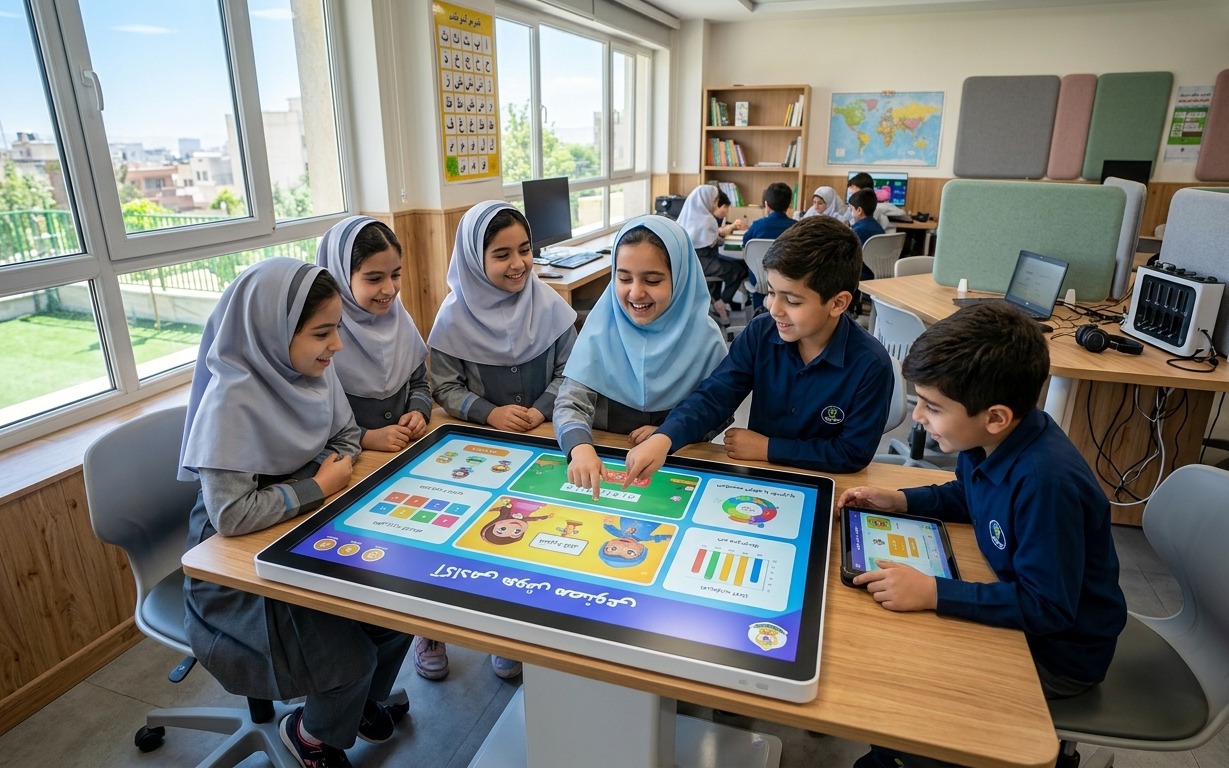
A multidisciplinary team of researchers and students at the University of Tehran has developed a comprehensive game-based learning platform.
According to ISNA, the educational platform—developed under the supervision of Seyed Hossein Hosseini-Noorzad, a faculty member at the College of Fine Arts, University of Tehran, and supported by the strategic “Hatef” program (a joint initiative of the University of Tehran and the Vice Presidency for Science, Technology and Knowledge-Based Economy)—represents an innovative step toward bridging artificial intelligence with educational and human sciences. Having been awarded the UNESCO National Prize in E-Learning, this knowledge-based solution not only provides a novel paradigm for personalized elementary education, but also underscores the transformative potential of artificial intelligence across diverse academic fields, ranging from educational psychology and game design to learning analytics and the knowledge economy. The platform transforms routine practice, revision, and academic consolidation into an engaging, interactive, and meaningful experience. Curricular concepts are seamlessly integrated with gamification mechanics, AI algorithms, learning data analytics, and core life skills, empowering students to hone critical thinking, problem-solving, entrepreneurship, financial literacy, and fundamental life competencies alongside their standard academic coursework.
In the architecture and conceptual design of the platform, gameplay is not treated as a mere peripheral tool to generate surface-level appeal; rather, the game world itself constitutes an integral part of the learning process. Consequently, the platform’s environment is fully grounded in Iranian language, culture, and social context. Course and game titles, character design, virtual environments, storylines, proverbs, and local cultural references have been harmoniously curated alongside visual aesthetics to present children with a unified, familiar, and meaningful world that situates their learning within an authentic cultural context.
The core premise behind the platform stems from a fundamental challenge in primary education: how to transform the learning consolidation phase—which inherently requires continuous practice and repetition—from a tedious chore into an intrinsically motivating, sustained journey for the child. The platform addresses this pedagogical challenge through the intelligent convergence of gameplay, learning science, and modern technology.
From the student’s viewpoint, the platform delivers a structured series of progressive, interactive games equipped with real-time feedback and scoring mechanisms calibrated to each child’s age, baseline ability, and personal learning pace. For parents, it provides a transparent window into their child’s educational trajectory; comprehensive analytical dashboards track performance across distinct academic subjects, enabling parents and educators to monitor learning rhythms and deliver content tailored to the unique needs of each learner.
According to user experience evaluations conducted during Nowruz 1405 (Spring 2026):
- 79% of students rated the games as well-suited to their academic grade level and age;
- 83% expressed a strong desire to continue using the platform in the future;
- 72% of parents affirmed that the platform significantly helped them identify their children’s strengths and areas for improvement;
- 83% of teachers regarded the platform’s analytical reports as an effective tool for gaining deeper insights into their students’ academic standing.
To date, the system has served more than 20,000 users nationwide. In addition to securing the UNESCO National Prize in E-Learning, it has achieved official certification as a knowledge-based product in the domain of computing applications within the humanities.
According to the University of Tehran, the showcase of the “Bubamzi” educational platform within the Hatef initiative—alongside other premier AI projects—has provided a vital venue for presenting its achievements and advancing discussions surrounding platform scaling, commercialization, and investment acquisition.





Comments
0 Comment


Contact us

All rights are reserved for the Center of Contemporary Jurisprudence, Islamic Seminary - Iran - Copyright
۰ Comment