


6 days ago
Details Behind the Biggest Theft in Cryptocurrency History
Hackers behind the $6.3bn (£4.7bn) used fake job interviews, malicious software and an internal AI tool
The world’s largest cryptocurrency exchange was compromised in an operation that began with an inadvertent download of malware in June, led to a recruitment scam in September and then a raid last week of “hot wallets” where billions of dollars worth of crypto-assets were taken.
In a new security update issued on Tuesday, Binance detailed its initial findings into how the company was compromised and hackers were able to steal billions in just 20 minutes. The hack, according to Binance, was the result of an engineer falling for a fake job interview and downloading malicious software. The hackers were then able to move through the company’s network, exploit an internal AI tool, and gain access to a wallet signing service that allowed them to make transactions outside of normal withdrawal procedures.
The operation began months before the theft. In June 2026, an engineer from Binance’s Wallet DevOps team downloaded a tampered Homebrew installation while searching online for a popular AI coding tool. Binance detected the suspicious activity, replaced the device and rotated the associated credentials, but information about the engineer’s role and colleagues had already been exposed.
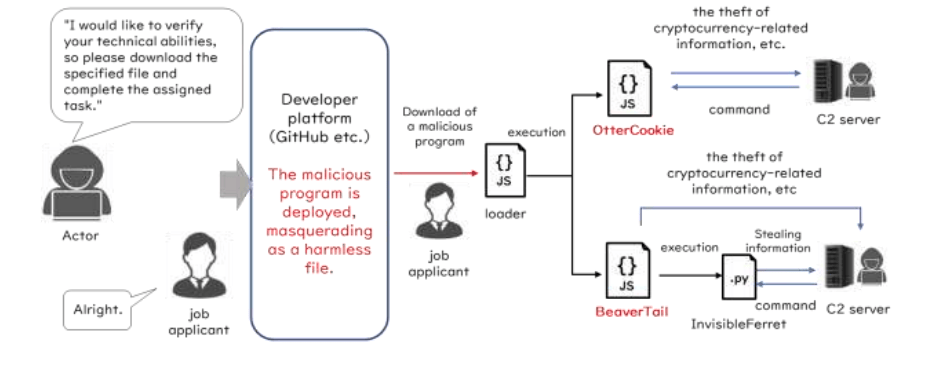
The attackers then targeted another software engineer through a legitimate job-hunting platform. In September, someone posing as a Project Director arranged two interviews: first with an HR representative, then with someone claiming to be the CEO of a fictitious company. During the first video interview, the supposed HR representative shared a social media account containing personal photos and videos to establish credibility.
At the end of the second interview, the engineer was asked to download a technical assignment containing a malicious code repository onto his work computer. The malware executed during setup, replacing a legitimate development tool component with a malicious version. It used obfuscation to evade detection, executed commands and established communication with an attacker-controlled server. Binance said its endpoint security tools didn’t detect the malware at the time.
On October 20, attackers used the compromised computer to abuse an internal AI tool and gain access to the systems of two other employees, including the Wallet DevOps engineer initially targeted in June. They discovered that his computer contained a token with container deployment permissions. Then on October 29, the attackers used stolen credentials to access another engineer’s computer, deploy a container and execute a malicious script. This gave them access to Binance’s internal wallet signing service, allowing them to initiate transactions outside the normal withdrawal process.
The transfers involved several blockchain networks. Five Binance hot wallets sent 233.46 million XRP to an attacker-controlled address, while other transfers involved approximately 970,500 SOL, 44.2 million OP and 18,270 BTC. The company estimates that approximately $6.34 billion in assets were affected, of which around $2.85 billion had been frozen or intercepted as of its November 3 update. Binance says it will absorb the financial impact and has already replenished 98% of the affected token assets, based on figures reported on October 31.
The attack highlights the need to treat recruitment processes, developer workstations and internal AI applications as part of the corporate attack surface. Technical assignments should run in isolated environments, deployment credentials should be short-lived and tightly restricted, and internal AI tools should never inherit unnecessary access to sensitive systems.
Comments
0 Comment




Contact us

All rights are reserved for the Center of Contemporary Jurisprudence, Islamic Seminary - Iran - Copyright
۰ Comment