

24 Aug 2026
AI Dependence May Weaken Future Doctors
As AI reshapes medical education and care, experts warn that overreliance could weaken clinical reasoning while stressing responsible, supervised use.
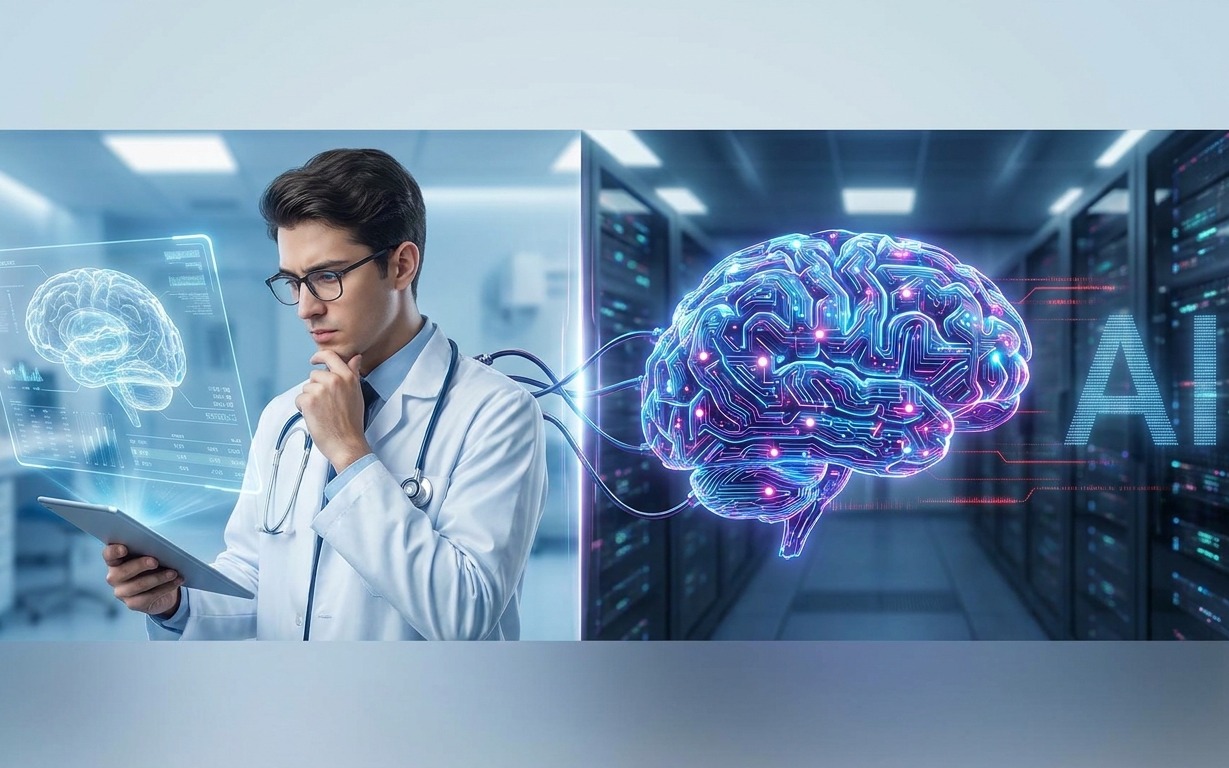
The rapid expansion of artificial intelligence in medical education and healthcare has raised concerns about its potential impact on the independent reasoning and clinical decision-making skills of future doctors.
AI tools can quickly provide information about symptoms, drug interactions, possible diagnoses, and treatment guidelines. They can also reduce physicians’ workloads and improve access to medical knowledge. However, experts warn that excessive reliance on these systems could prevent medical students from developing essential skills in diagnosis and patient care.
Traditionally, students were expected to assess symptoms, consider possible diagnoses and identify risks before receiving feedback. This process, including mistakes and corrections, helped them understand their limitations and strengthen their clinical reasoning. AI can now complete many of these steps within seconds, potentially allowing students to obtain an answer without learning the reasoning process behind it.
This may create serious problems in real-world clinical settings, where physicians must evaluate incomplete information, weigh competing possibilities and question an AI recommendation when necessary. Medical AI systems are not always reliable, and research published in Nature Medicine has indicated that some tools may be less dependable than users expect. Doctors who become accustomed to relying on ready-made answers may therefore find it more difficult to identify inaccurate or incomplete results.
Experts emphasize that these concerns do not amount to opposition to AI in medicine. Instead, they argue that the technology should support—not replace—the student’s thinking process. Students could first conduct their own assessment, identify a preliminary diagnosis and consider potential warning signs before consulting an AI system. They could then compare the system’s response with their own evaluation and examine any errors or omissions.
International research also points to a gap between physicians’ positive views of AI and their actual use of the technology. A study involving 1,049 doctors from 50 countries found that 86.5 percent reported basic to advanced familiarity with AI, while 80.2 percent believed it could improve medical practice. Yet only 27.8 percent said they had used AI professionally, and just 17.7 percent had received formal training.
Physicians viewed improved productivity, faster service delivery and more effective care as the main benefits of AI. At the same time, limited formal training and insufficient investment by healthcare institutions were identified as major barriers. Doctors who had received formal AI training were more than three times as likely to use the technology, while those working in facilities equipped with AI systems were more than eight times as likely to do so.
The growing use of AI has also created questions about legal responsibility when the technology makes a mistake. If an AI system provides an incorrect diagnosis or treatment recommendation and a patient is harmed, responsibility may be disputed among the physician, healthcare provider and technology developer.
In the United Kingdom, the Medical Defence Union has warned that doctors and the National Health Service could face medical negligence claims resulting from AI-related errors, even when the immediate decision was generated by an AI tool. The issue has become increasingly important as AI is used to analyze medical images, summarize doctor–patient conversations and prepare clinical correspondence.
Experts say clear rules on responsibility are essential to protect patients and maintain public trust. The doctors of the future will need not only to use AI effectively, but also to assess the reliability of its recommendations and preserve their own professional judgment.
Source: ISNA – “Will Future Doctors Become Victims of Dependence on Artificial Intelligence?”


Comments
0 Comment
Most visited news



Latest articles
Contact us

All rights are reserved for the Center of Contemporary Jurisprudence, Islamic Seminary - Iran - Copyright
۰ Comment