

04 Mar 2021
Work Carried Out by the DCF Is a Major Achievement
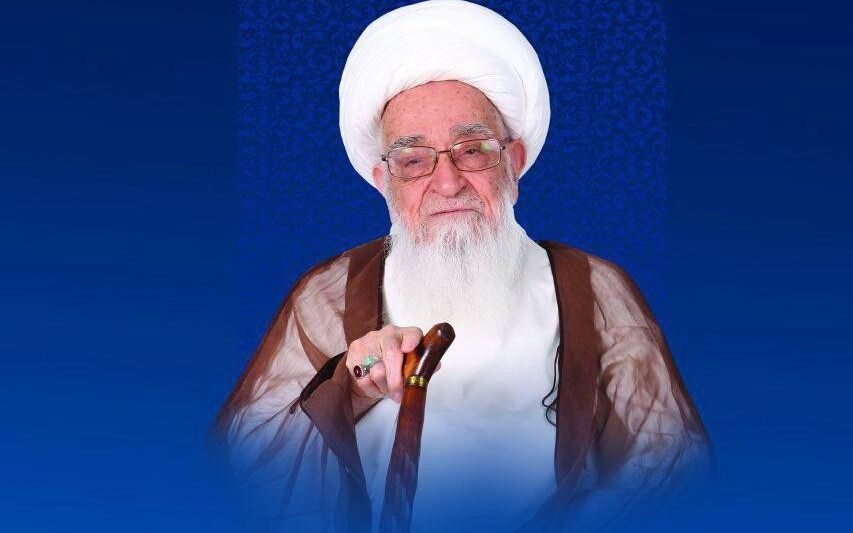
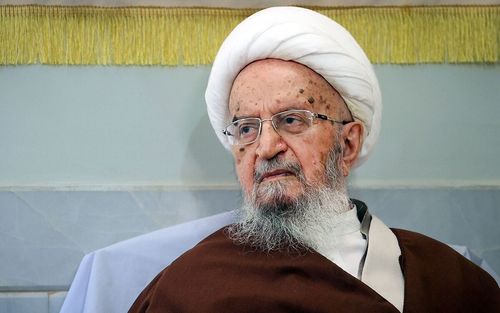
Grand Ayatollah Safi Golpaygani, expressed his satisfaction in a meeting with members of the Scientific Council of the Department of Contemporary Jurisprudence
Expressing satisfaction with the activities conducted and offering prayers and supplications to Hadhrat Wali al-‘Asr (may God hasten his reappearance) for the success of this institution (Daftar-e Fiqh-e Mo‘āṣer) in achieving its great goals, the senior marja‘, Grand Ayatollah Safi Golpaygani, emphasized the superiority of Shia fiqh over comparable international academic and legal systems. He added: “Our fiqh has a long-standing history dating back to the era of the Infallible Imams (peace be upon them) and their companions. As we have progressed through time, we have sought to continue those same teachings. Since many of today’s issues did not exist in earlier periods, they must be derived from the fiqh of the Ahl al-Bayt (peace be upon them). Just as time has advanced, fiqh has also advanced; however, it must do so in a way that nothing falls outside its original foundations.”
Grand Ayatollah Golpaygani further remarked: “The work you are doing is necessary so that these new issues are properly identified, and the clearer these cases become, the better.” He stressed: “Progress must be made in such a way that the fundamental principles of fiqh are preserved, and these new matters are extracted from them. In reality, your task is to explain the teachings and narrations of the Ahl al-Bayt (peace be upon them). In other words, our fiqh is not new—yet at the same time, it is renewed.”
Concluding his remarks, he said: “If we fail to address these new issues, it would be a deficiency. Our fiqh is rich and fully capable of answering all questions.”
During the meeting, Ayatollah Alireza A‘rafi, Director of the Islamic Seminaries (Hawza ‘Ilmiyya), noted that in some contemporary fiqh and usul al-fiqh issues that are urgently needed today, individuals sometimes intervene without relying on sound fiqh and usuli foundations. He stated that due to the importance and sensitivity of such matters, the Hawza had to take the lead, both to provide rigorous scholarly training for students and to offer precise and reliable answers to these issues.
Ayatollah A‘rafi added that, with the coordination of the Supreme Council of the Hawza, a group of well-known dars al-kharij (advanced jurisprudence) instructors has been formed under the supervision of Ayatollah Shab Zendeh-Dar. Their regular scholarly sessions—held once or twice weekly—represent one of the Hawza’s notable successes.
Ayatollah Shab Zendeh-Dar, in brief remarks, explained that the Scientific Council of Contemporary Fiqh consists of senior scholars Ayatollah Shahidi, Ayatollah Shoopa’i, Ayatollah Andalib, Ayatollah Qa’ini, Ayatollah Modarresi Yazdi, as well as himself. He emphasized that the scholarly work of this group requires the support of eminent maraji‘ such as Ayatollah Safi Golpaygani, so that the Supreme Council can proceed with greater confidence, integrate the council’s outputs into the Hawza’s educational system, and enable this group to continue its mission with greater strength. Such support, he noted, would also allow students and advanced scholars to participate more actively in these fields.
Ayatollah Qa’ini, one of the dars al-kharij professors and another member of the Department of Contemporary Jurisprudence (Fiqh) , referred to the achievements of the late Shaykh Husayn Hilli (may God have mercy on him) in addressing new issues and publishing the book Buhuth Fiqhiyya on contemporary jurisprudential matters. While expressing concern that some instructors, due to heavy commitments, engage less with new topics, he requested that Ayatollah Safi encourage qualified scholars more actively to enter and contribute to emerging fields of fiqh.
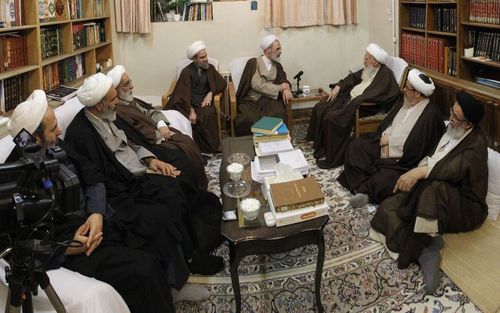
This meeting was attended by Ayatollah A‘rafi, Director of the Islamic Seminaries; members of the Scientific Council of the Department of Contemporary Jurisprudence (Fiqh) —Ayatollah Qa’ini, Ayatollah Shab Zendeh-Dar, Ayatollah Shahidi, Ayatollah Andalib, Ayatollah Shoopa’i, and Ayatollah Modarresi Yazdi; and the Director of the Department of Contemporary Jurisprudence (Fiqh), Hojjat al-Islam Hosein Ethna-Ashari.
Similar news



Comments
0 Comment
Most visited news



Latest articles
Contact us

All rights are reserved for the Center of Contemporary Jurisprudence, Islamic Seminary - Iran - Copyright
۰ Comment