

07 May 2026
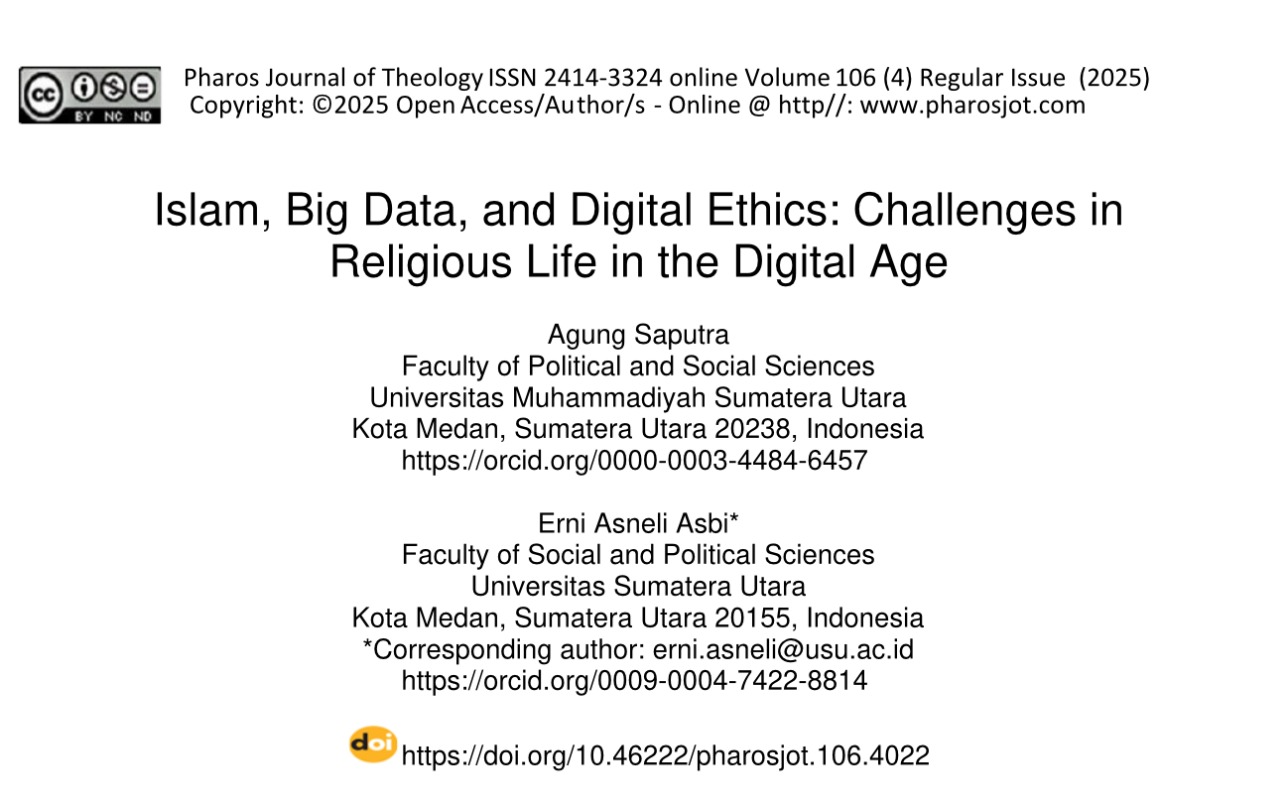
Researchers Call for Islamic Digital Ethics Framework as AI Reshapes Religious Life
Academic study warns that AI, big data, and digital platforms are rapidly transforming Islamic religious life in ways that bring opportunities and ethical risks
The paper, titled Islam, Big Data, and Digital Ethics: Challenges in Religious Life in the Digital Age, argues that Muslim societies are entering a new era in which technology increasingly influences worship, religious authority, education, and spiritual identity. Published in the Pharos Journal of Theology, the study explores how AI-powered applications, algorithm-driven platforms, and large-scale data collection are becoming embedded in everyday religious practices. Researchers say Muslims now rely heavily on mobile applications for prayer reminders, Qur’an recitation, online fatwas, digital zakat systems, and virtual religious learning. These technologies have dramatically expanded access to Islamic knowledge, especially for Muslims living in non-Muslim-majority countries or regions with limited access to scholars and mosques.
The authors describe this transformation as more than a technological upgrade. According to the study, digitalization represents a “fundamental and pervasive shift” in how Muslims interact with faith, community, and spirituality. Social media platforms such as Instagram, YouTube, and X have enabled religious teachers and influencers to reach global audiences instantly, creating what researchers describe as a new “digital Muslim public sphere”.
Researchers note that digital technology has brought clear advantages. AI systems can personalize worship experiences, improve access to religious education, automate administrative religious services, and strengthen global Islamic connectivity. Online learning tools also allow users to study tajwid, Islamic jurisprudence, and theology remotely with unprecedented convenience.
However, the paper warns that these benefits come with growing ethical and theological concerns. One major issue highlighted is privacy and data misuse. The study argues that many Islamic applications collect sensitive personal information, including religious behavior, location data, financial activity, and spiritual habits.
Researchers warn that without proper safeguards, this data could be exploited commercially or politically. Islamic ethics, the authors argue, strongly emphasize dignity, confidentiality, trust, and protection of personal information, making digital privacy a central concern for Muslim communities.
The researchers also express concern that technology may weaken the spiritual depth of religious practice. While digital tools make worship easier and more accessible, they may unintentionally encourage a more mechanical and superficial approach to faith. The paper questions whether AI-generated religious experiences can truly replace the emotional and spiritual connection associated with direct worship, community gatherings, and human interaction.
Another key concern involves the changing nature of religious authority online. Traditional scholars and institutions increasingly compete with independent online preachers and influencers who often have large digital followings but limited scholarly oversight. According to the study, this shift has democratized religious discussion but also increased the spread of misinformation, unverified fatwas, ideological polarization, and extremist interpretations. Researchers warn that algorithms designed to maximize engagement may amplify divisive or sensational religious content.
The paper places special emphasis on the Islamic principle of tabayyun — verification of information before accepting or spreading it. In the digital age, researchers say this principle has become critical in combating fake news, manipulated religious content, and online radicalization.
To address these challenges, the study proposes the creation of a proactive Islamic digital ethics framework rooted in core Islamic values such as justice (al-adl), honesty (as-sidq), trustworthiness (al-amanah), and social responsibility. The framework would guide how Muslim societies design, regulate, and use emerging technologies. Researchers argue that AI systems and big data practices should align with maqasid al-shariah — the higher objectives of Islamic law — including the protection of religion, life, intellect, family, and property.
The study also highlights the growing role of ijtihad — independent Islamic reasoning — in adapting traditional religious principles to modern technological realities. Scholars, technologists, policymakers, and educators are encouraged to work together to ensure that innovation strengthens rather than undermines spiritual and ethical values.
Experts say the concerns raised in the paper reflect wider global debates surrounding AI ethics and digital governance. Broader research in digital ethics has similarly warned that artificial intelligence and mass data collection could threaten privacy, cultural diversity, human autonomy, and social cohesion if left unchecked.
The authors conclude that digital technology itself is not inherently harmful, but its impact depends on how societies choose to govern and apply it. They argue that responsible innovation, guided by ethical and spiritual principles, could allow Muslim communities to benefit from technological progress without sacrificing the deeper human and spiritual dimensions of religious life.
Agung Saputra and Erni Asneli Asbi, “Islam, Big Data, and Digital Ethics: Challenges in Religious Life in the Digital Age”, Pharos Journal of Theology 106(106.4)DOI:10.46222/pharosjot.106.4022LicenseCC BY-NC-ND 4.0, August 2025.
https://www.researchgate.net/publication/394209614_Islam_Big_Data_and_Digital_Ethics_Challenges_in_Religious_Life_in_the_Digital_Age
Similar news




Comments
0 Comment
Most visited news




Latest articles
Contact us

All rights are reserved for the Center of Contemporary Jurisprudence, Islamic Seminary - Iran - Copyright
۰ Comment