

08 Jun 2026
Vice President for Science, Technology, and the Knowledge-Based Economy Outlines Vision for Iran
Iran’s Vice President emphasis for concentrating on practical projects with measurable outcomes to help solve national challenges.
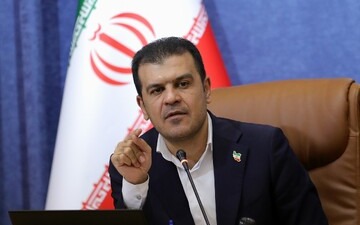
Iran’s Vice President for Science, Technology, and the Knowledge-Based Economy emphasized the need to bring technology into the everyday lives of citizens and proposed five priority areas: AI-powered technology monitoring, intellectual property reform, technology-enabled spiritual well-being, transformation of science diplomacy, and addressing “technology poverty.” He also called for concentrating on practical projects with measurable outcomes to help solve national challenges.
According to ISNA, during a joint meeting with Ali Akbar Rashad, President of the Islamic Culture and Thought Research Institute, Vice President Hossein Afshin stressed the importance of integrating technology into cultural and Islamic thought institutions. He stated that the participation of research centers focused on culture and Islamic thought in science and technology is highly valuable. According to Afshin, the difference between Iran and many other countries is that technology in those countries has become part of everyday life, whereas in Iran it remains largely confined to elites. He argued that technology cannot achieve genuine and sustainable growth until it reaches the broader public. Afshin also proposed defining a limited number of clear priorities rather than pursuing numerous large and scattered projects.
1. Technology Monitoring Through Artificial Intelligence
One of the key priorities, he said, is the creation of an intelligent science and technology monitoring system powered by AI. Afshin noted that the country’s main challenge today is not programming languages but data collection and organization. He emphasized that gathering and structuring both domestic and international data should be a major national priority and should be continuously pursued.
2. Turning Intellectual Property into National Wealth
Afshin highlighted the need to reform intellectual property (IP) policies, noting that the issue has also been discussed within the Supreme Council of the Cultural Revolution. He said policymakers should assess whether legal reforms are necessary and, if so, use the capacities of the Iranian Parliament and the council to implement them.
According to Afshin, intellectual property should be viewed as a national asset and source of wealth. Without appropriate management and regulatory mechanisms, however, it could become a liability. Referring to challenges in patent registration and intellectual property systems, he argued that some patents have become merely a means of obtaining academic benefits or trading research credits, rather than creating economic value. The goal, he said, should be to transform intellectual property into tangible wealth and economic growth. He encouraged the research institute to pursue intellectual property reform as a joint project with his office, emphasizing that its benefits would extend across generations.
3. New Technologies for Spiritual Well-Being
Afshin also discussed spiritual health, arguing that health should not be limited to physical well-being. He said psychological and spiritual well-being are equally important and that emerging technologies could be used to develop innovative solutions in this area. He described the field as one with significant potential for research and practical applications.
4. Transforming Scientific and Technological Diplomacy
Another priority highlighted by Afshin was the modernization of Iran’s international scientific and technological relations. He argued that the post-war global environment will require stronger and more effective international engagement. In many cases, he said, international cooperation has been pursued without sufficient cultural preparation within society, making a new approach necessary.
5. Tackling “Technology Poverty”
Afshin introduced the concept of “technology poverty” as a major emerging challenge. He explained that while economic inequality between nations was once the primary concern, technological inequality is now becoming an even greater threat. According to him, the widening technology gap could prove more dangerous than the wealth gap itself. To reduce this divide, he proposed making technology more affordable and expanding collaborative technological partnerships between countries.
Moving Toward Implementation
In his concluding remarks, Afshin stressed the importance of holding regular joint meetings with organizations responsible for international scientific and technological cooperation, as well as various departments within the Vice Presidency for Science and Technology. The goal, he said, is to ensure that these proposals are translated into concrete actions and measurable results for the country.
https://www.isna.ir/news/1405031709499/نسخه-افشین-برای-آینده-فناوری-ایران-تمرکز-بر-۵-موضوع-کلیدی
Similar news



Comments
0 Comment
Most visited news


Latest articles
Contact us

All rights are reserved for the Center of Contemporary Jurisprudence, Islamic Seminary - Iran - Copyright
۰ Comment