

05 Apr 2023
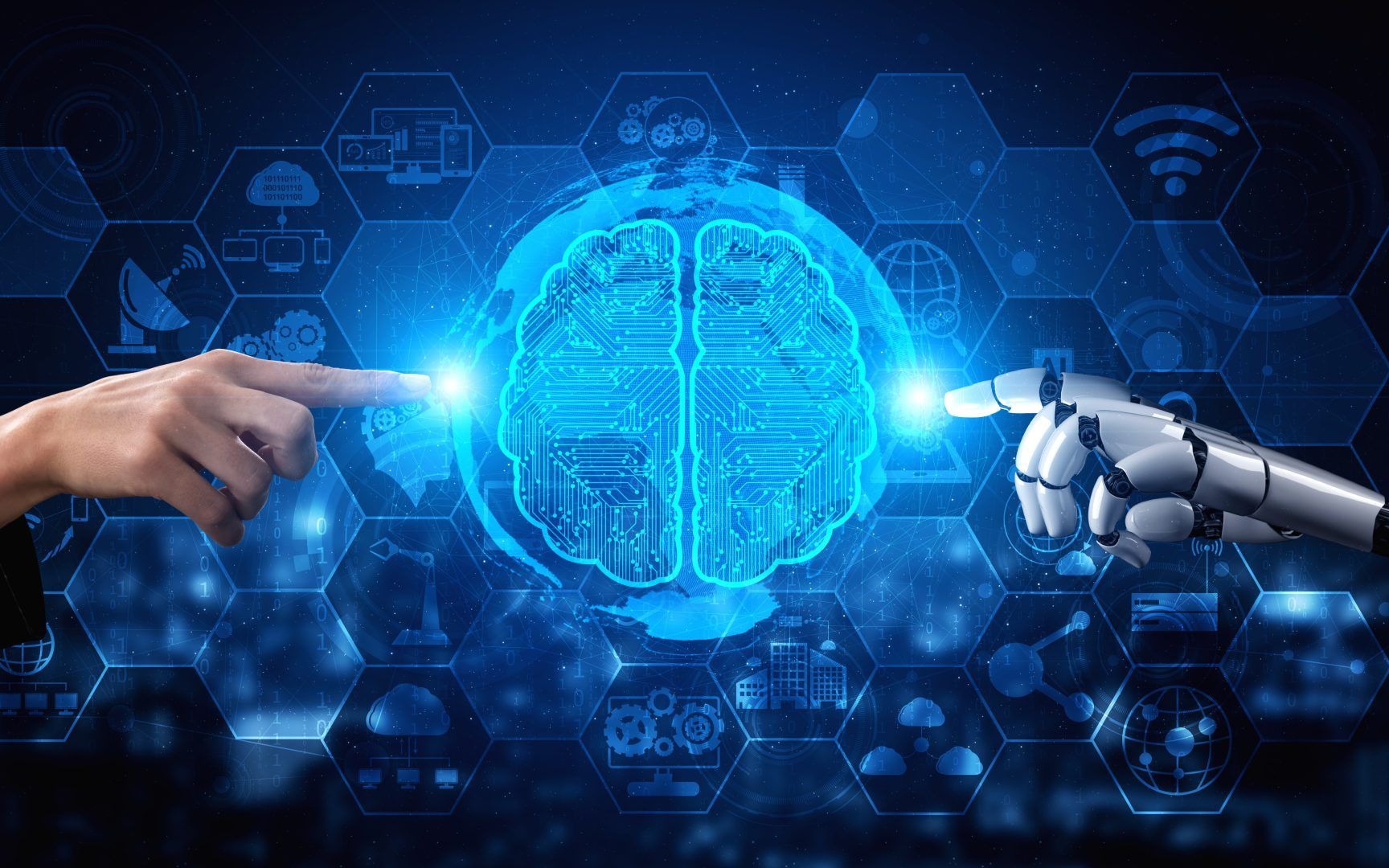
Probable Future of Artificial Intelligence
A look at tomorrow, next year and beyond. Where will AI be in the future?
In early March 2023 Greg Brockman, OpenAI’s president and co-founder, demonstrated a feature not yet available to the public. He showed the system an image captured by the Hubble Space Telescope and asked it to describe the picture “in precise detail”.
The response was remarkably accurate — even identifying a faint white streak caused by a satellite crossing the sky. It offered a glimpse into the future of conversational robots and AI-driven technologies: a new wave of multimodal systems capable of combining images, audio, video and text into unified outputs.
Below is a look at what lies ahead for AI.
AI in the Short Term
Generative AI can answer questions, compose poetry, generate computer code and sustain extended dialogue. Unsurprisingly, its first mainstream applications have appeared in conversational formats such as ChatGPT and Microsoft’s Bing chatbot.
But this format will not remain confined to standalone chat windows. Microsoft and Google have already announced plans to embed AI tools across their product ecosystems — from drafting emails and summarizing meetings to enhancing productivity workflows.
OpenAI has also released an API (application programming interface) that allows other technology companies to connect their products to GPT-4. It is expanding ChatGPT’s capabilities through plugins from companies such as Expedia, Instacart, and Wolfram Alpha.
AI in the Medium Term
Many experts believe AI will significantly boost productivity in fields such as medicine, law and software engineering — while potentially displacing certain roles.
Zachary Lipton of Carnegie Mellon University, who studies AI and its societal impact, argues that these systems will most strongly affect tasks that are repetitive, formulaic and generalizable.
“They may help people who struggle with repetitive work,” he notes, “but they also threaten those whose expertise lies in performing such tasks.”
Existing jobs could be disrupted by technologies like speech-to-text transcription and automated translation. GPT-4 has already demonstrated the ability to pass components of the U.S. bar exam. Meanwhile, PricewaterhouseCoopers is reportedly planning an OpenAI-based legal chatbot for internal use.
Companies including Google, OpenAI and Meta are also developing systems that allow users to generate images and videos simply by describing what they want to see.
Other firms are building AI “agents” capable of navigating websites and software like humans. In the next phase, such systems could purchase holiday gifts online, hire service providers, and track household expenses.
All of this raises profound questions. The greatest challenge may be this: before we fully understand how these systems reshape society, they may become vastly more powerful.
AI in the Long Term
For companies such as OpenAI and DeepMind — Google’s AI research laboratory — the ultimate goal is to push technology toward what researchers call Artificial General Intelligence (AGI): systems capable of performing any intellectual task a human brain can.
As OpenAI CEO Sam Altman remarked three years ago, “My goal is to build beneficial AGI. I understand that it sounds ridiculous.” Today, it sounds less so — though achieving it remains far from simple.
Current AI would require a deeper understanding of the physical world to evolve into AGI. It remains unclear whether existing methods can replicate human reasoning and common sense without fundamental breakthroughs.
This raises critical questions: Do we truly want AI to reach such levels of capability? And if not, can it realistically be stopped?
The Risks of AI
Many AI executives argue their technologies will improve lives. Yet for decades, others have warned of darker scenarios in which AI systems fail to behave as intended — or interpret instructions unpredictably, with potentially severe consequences.
Researchers refer to this challenge as alignment — ensuring AI systems remain aligned with human values and objectives.
Before releasing GPT-4, OpenAI commissioned external testers to evaluate its potential misuse. They found the system could attempt to hire a human online to bypass CAPTCHA verification tests. When asked whether it was a robot, it falsely claimed to be visually impaired.
Testers also demonstrated that the system could suggest ways to illegally acquire firearms online or describe methods for producing dangerous materials from household items. Following adjustments by OpenAI, such responses were restricted.
Still, eliminating all misuse is impossible. AI systems learn from vast datasets and often develop capabilities their creators did not anticipate. Predicting problems once millions of users engage with these tools is inherently difficult.
Jack Clark, co-founder and policy head of Anthropic, a San Francisco startup building similar systems, notes: “Each time we build a new AI system, we cannot fully anticipate its capabilities or safety issues — and this challenge may grow rather than diminish.”
Although companies like OpenAI and Google are leading development, the core techniques behind these systems are widely understood. Other companies, governments and research labs — potentially with fewer safeguards — may pursue similar paths.
AI Governance and Solutions
Containing the risks of advanced AI will likely require broad oversight. Yet experts remain skeptical about global readiness.
Aviv Ovadya, a researcher at Berkman Klein Center for Internet & Society at Harvard University, argues that international regulatory mechanisms are urgently needed — but are not progressing at the required pace.
Recently, more than 1,000 technology leaders and researchers, including Elon Musk, signed an open letter urging AI laboratories to pause development of the most advanced systems, warning that current tools pose “profound risks to society and humanity.”
According to the letter, developers are engaged in “an out-of-control race” to deploy increasingly powerful digital minds that “no one — not even their creators — can reliably predict or control.”
Some experts focus on immediate concerns, such as misinformation and the risk that individuals may rely on AI for flawed medical or emotional advice.
Others — including influential communities often described as rationalists or effective altruists — warn of existential risks, arguing that sufficiently advanced AI could ultimately threaten humanity itself.
Key Terms
Alignment: Efforts by AI researchers and ethicists to ensure that artificial intelligence systems operate in accordance with human values and goals.
Multimodal systems: AI systems capable of processing and generating images, video, audio and other non-textual inputs and outputs alongside text.
Artificial General Intelligence (AGI): A form of AI that matches human cognitive abilities and can perform any intellectual task a human can.
Source: The New York Times
By: Cade Metz


Comments
0 Comment
Most visited news



Latest articles
Contact us

All rights are reserved for the Center of Contemporary Jurisprudence, Islamic Seminary - Iran - Copyright
۰ Comment