

08 Oct 2024
The Necessity of Fiqh and Ijtihad in Responding to Emerging Issues
A senior official at Department for Contemporary Jurisprudence (Fiqh) in Qom, discussed that fiqh and ijtihad must respond to modern and emerging developments
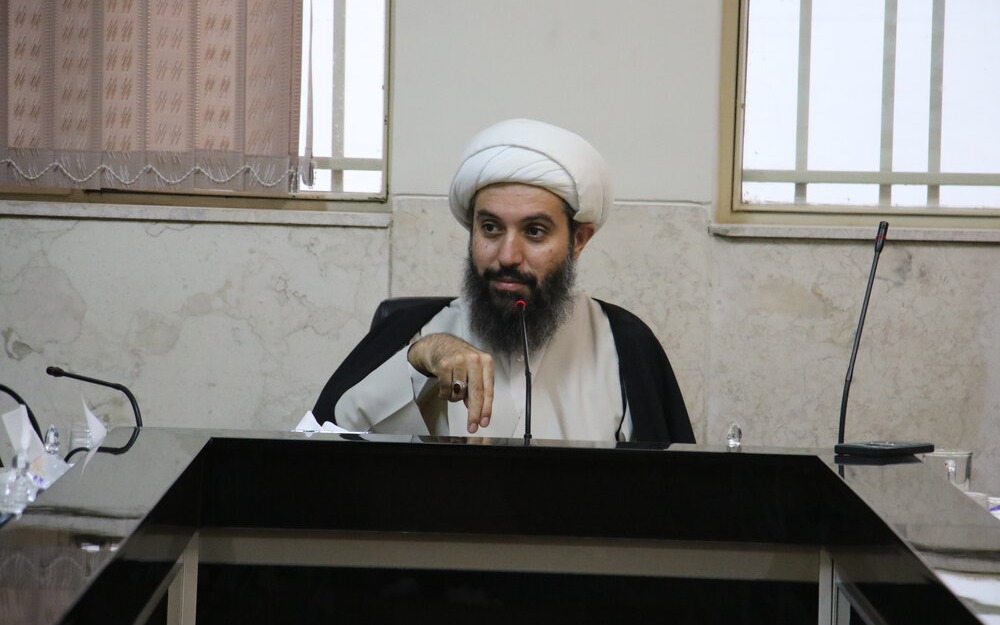
A senior official at the Department for Contemporary Jurisprudence (Fiqh) in Qom, referring to some of the modern and emerging developments in today’s world to which fiqh and ijtihad must provide appropriate responses, said: “If we do not respond to today’s needs, other unsuitable institutions will step in to answer them.”
According to the Hawzah News Agency in Isfahan, Hujjat al-Islam wal-Muslimeen Hossein Ethna Ashari, during a meeting reviewing contemporary fiqh and the texts and courses produced in this field—which was attended by several teachers of advanced seminary studies in the Isfahan Hawzah—emphasized the necessity of professors making use of these materials in intermediate and advanced courses. He stated: “One of the issues pursued by the Department for Contemporary Jurisprudence in Qom has been the foundation courses in contemporary fiqh.”
Explaining the nature of these preparatory courses, the director of the Department for Contemporary Jurisprudence (Fiqh) in Qom said: “Over the past sixty years, our Islamic legal scholars have authored books on contemporary subjects. “From this body of scholarship, fifteen volumes covering eight academic subjects were selected, and introductory courses in contemporary fiqh were subsequently offered as supplementary courses within the seminary curriculum.”.”
He added: “Students in the ninth and tenth levels, as well as students attending advanced ‘kharij’ classes, participate in these courses as supplementary studies. This year, 157 instructors are teaching these courses, and around one thousand seminarians are enrolled.”
Reviewing and Producing an Islamic Jurisprudential Framework for Artificial Intelligence
Hujjat al-Islam Ethna Ashari described another important dimension of contemporary fiqh studies as the scholarly outputs of the office, its instructors, and its academic products. He continued: “At the seminary level, we have so far published fifty books in Arabic, Persian, and English, and this work is ongoing. This year, we plan to officially unveil these works.”
He further stated: “In addition to seminary programs, there is also a need for what is produced in the Hawzah to enter academic and university discourse. Therefore, we established a chain linking ijtihad with universities, and our effort is to integrate our instructors’ works into academic literature”.
The director of the Department for Contemporary Jurisprudence stressed the importance of dissertation research as well, saying: “A positive movement is underway in supporting theses on contemporary fiqh, and 188 research topics in this area have already been approved”.
He identified another important issue in contemporary fiqh as the influence and feedback of the seminary’s scholarly work on governance and public policy. He explained: “Reviewing and critiquing legal documents and laws, as well as producing new legal and policy frameworks, has also been part of our mission. One example is the examination and development of a jurisprudential framework for artificial intelligence.”
Hujjat al-Islam Ethna Ashari stated that the Hawzah’s failure to address modern and contemporary issues would not prevent society from obtaining answers elsewhere. He said: “If we do not produce and finalize this content within the Hawzah today, then within a year, judges in Iran’s judiciary may rely on foreign and Western-produced frameworks as the basis for issuing rulings regarding AI-related crimes. Therefore, without ijtihad-based work on contemporary issues, these matters cannot be resolved merely by having someone provide simple answers to questions.”
He noted: “At present, in some areas, we already possess advanced jurisprudential texts and the necessary academic materials. This means that seminarians now have substantive content available for study.” He also stated: “Many professors, particularly diligent scholars, repeatedly emphasize the importance of subject recognition and understanding, so that the scholar reaches a point where they can express an informed jurisprudential opinion. Accordingly, alongside the articles written on these issues, significant work has also been carried out in the field of subject analysis.”
Allocating at Least One Day per Week in Seminary Courses to Contemporary Issues
He added: “When a student becomes engaged with real-world issues and returns to the sources, they discover new insights from the narrations and derive new principles for resolving contradictions. Therefore, this work also has valuable educational and jurisprudential benefits.”
Referring to some of the new and emerging developments in the contemporary world that require meaningful responses from fiqh and ijtihad, the director of the Department for Contemporary Jurisprudence in Qom said: “If we fail to answer today’s needs, other institutions will step in to provide those answers. Therefore, our request to seminary professors is that at least one day each week in intermediate and advanced courses be devoted to contemporary issues.”
He emphasized: “We should also recognize that this effort has only recently begun after many years, and one should never expect perfection in the first step. However, it is a beginning, and with the participation of professors, this work will show stronger results in the coming years. Without their involvement, this progress will not occur.”
At the end of the meeting, several professors from the Isfahan Hawzah raised points, requested greater cooperation, and offered various suggestions.
https://www.hawzahnews.com/news/1190588/پاسخ-دهی-فقه-و-اجتهاد-به-رویدادهای-نو-ضروری-است
Similar news




Comments
0 Comment
Most visited news


Latest articles
Contact us

All rights are reserved for the Center of Contemporary Jurisprudence, Islamic Seminary - Iran - Copyright
۰ Comment