

14 Oct 2022
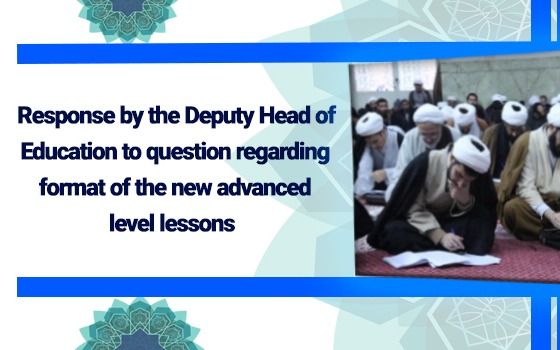
Response by the Deputy Head of Education to the Format of New Advanced Level Lessons
Deputy head of education of the Religious Seminaries, responded to questions regarding the new formats of advanced level lessons
The seminary news agency and the Education of Religious Seminaries, organised a session whereby Hujjat ul Islam wal Muslimeen Rustam Nijād responded to questions brought forth by professors and students regarding the new format of advanced level lessons set by the Islamic seminary.
In a series of questions and answers, the goals and features of the new format of advanced level lessons was clearly elaborated upon and it is hoped that such a practice is kept constant. The following two links contain the questions and answers propound upon and a detailed explanation of the new learning format has been presented:
There are two noteworthy points in the above material which indicate to the original subject matter, which have been decided upon after a few years of gathering the opinions of the professors:
1) For general students, while observing traditional learning methods (such as discussions and essays) it is forbidden for them to study more than 4 courses a day and increasing the study years is not possible
2) In the majority of the general lessons of the seminary, the final sections of the course are not taught (where in fact, the final sections do not necessarily have a lesser priority in comparison to all the other sections) and professors are looking for ways to teach these sections. Having said that, the instances that are currently being considered are as follows:
Firstly every professor, who in accordance to previous formats, is able to teach the complete study program with their top students should continue the same format and after completing the term program should hold exams (the number of exams will be increased). However, as for professors who in the past were unable to complete the term program, instead of eliminating the final sections, in accordance to the importance and appropriate distribution, should dedicate some lessons to self study. The recommended term study program can be modified after receiving general feedback from the professors.
Thus, the previous education system is preserved for interested professors and students and as for the rest, it has been endeavoured that a more rational planning is considered.
Similar news


Comments
0 Comment
Most visited news


Latest articles
Contact us

All rights are reserved for the Center of Contemporary Jurisprudence, Islamic Seminary - Iran - Copyright
۰ Comment