

26 May 2026
Global Banking Giants warn that AI will Reshape Workforce
Major financial institutions are accelerating automation efforts across customer onboarding, fraud monitoring, compliance and back-office operations
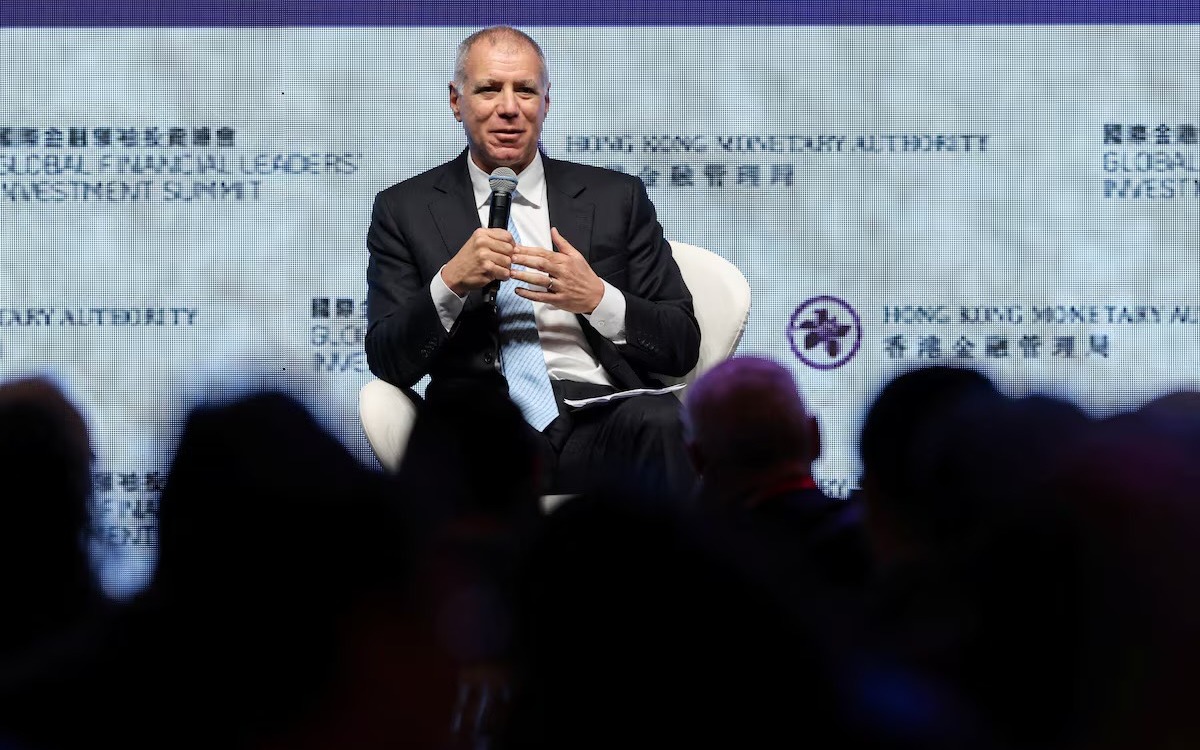
At the center of the debate is HSBC, whose CEO, Georges Elhedery, recently urged employees not to resist AI-driven transformation as the bank prepares for significant restructuring. Speaking at an investor event, Elhedery told staff, according to Reuters, “We all know generative AI will destroy certain jobs and will create new jobs.” He encouraged workers not to become “overwhelmed” or resistant to technological change, arguing that AI could help employees become “more productive versions of themselves.”
These remarks come amid growing evidence that major financial institutions are rapidly accelerating automation across customer onboarding, fraud monitoring, compliance, and back-office operations.
Reuters also reported that rival Standard Chartered plans to eliminate nearly 8,000 jobs—around 15% of its corporate-function workforce—by 2030, as it increases investment in AI and automation. Its CEO, Bill Winters, drew criticism after referring to some affected roles as “lower-value human capital.” He later apologized and sought to reassure staff that the transition would include retraining and redeployment opportunities.
More broadly, the shift reflects an industry-wide transformation in which AI is increasingly viewed not only as a productivity tool but as a structural force reshaping banking itself. Analysts at Morgan Stanley found that banks and other major firms in finance, technology, and professional services have already reduced staffing levels, particularly among entry-level and offshore roles most exposed to automation.
HSBC itself is reportedly considering cuts of up to 20,000 positions—roughly 10% of its workforce—as it expands AI adoption. According to Reuters, non-client-facing roles in global service centers are expected to be among the most affected. At the same time, the bank has been investing heavily in AI infrastructure, including the appointment of David Rice as its first chief AI officer. Internally, AI tools are already being used to shorten onboarding processes, streamline workflows, and enhance anti–financial crime systems.
Other major banks are moving in a similar direction. Executives at Goldman Sachs and Wells Fargo have acknowledged that AI is beginning to reshape staffing needs, though some emphasize that, so far, the technology has primarily enhanced productivity rather than directly replacing workers.
The rapid rollout of AI has also fueled public concern. A recent study by King’s College London found that 60% of Britons believe AI will eliminate more jobs than it creates, while one in five respondents feared it could contribute to civil unrest.
At the same time, technology experts and labor economists have urged caution. Fabian Braesemann of the Oxford Internet Institute warned that firms risk overcorrecting by cutting staff too aggressively before fully understanding AI’s long-term productivity impact.
Still, industry momentum continues to build. Reuters reports that banks are becoming increasingly transparent about AI’s role in future workforce reductions, marking a shift away from earlier narratives centered on “efficiency” and “augmentation.” As automation accelerates, the central question for the banking sector may no longer be whether AI will transform jobs, but how quickly workers and institutions can adapt to the change.
https://www.reuters.com/legal/legalindustry/dont-fight-ai-hsbc-ceo-tells-staff-banks-begin-job-cuts-2026-05-20/



Comments
0 Comment
Most visited news


Latest articles
Contact us

All rights are reserved for the Center of Contemporary Jurisprudence, Islamic Seminary - Iran - Copyright
۰ Comment