

22 Jun 2026
Vice Presidency for Science Redesigns Support Model for AI Assistant Project
70% of project costs will now be covered by the Vice Presidency for Science and 30% by the requesting ministries
Tehran (IRNA) – Iran's Vice President for Science announced a change in the support model for the AI Assistant Project, stating that, to measure the actual demand of government agencies, 70% of project costs will now be covered by the Vice Presidency for Science and 30% by the requesting ministries.
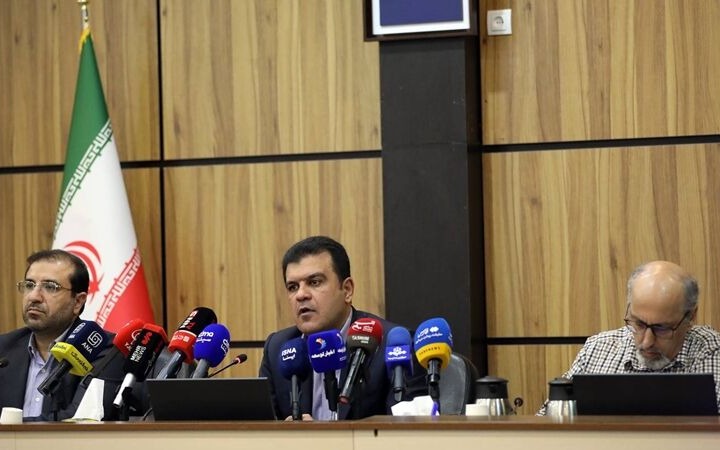
A meeting to review the progress of AI assistant projects was held on Saturday, June 20, at the Vice Presidency for Science, Technology, and Knowledge-Based Economy, attended by Vice President for Science Hossein Afshin. During the meeting, project teams developing AI assistants for government agencies presented their latest achievements and project outcomes, and the progress of the initiatives was evaluated.
Afshin emphasized the need to develop technology within the country's executive structures, noting that although Iran ranks among the top 12 to 14 countries in the world in AI scientific output, there remains a significant gap between scientific achievements and practical applications.
According to him, narrowing this gap requires cooperation among universities, the government, and executive agencies, as well as overcoming resistance to the use of data and modern technologies.
Afshin stated that the concept of management has fundamentally changed:
"Organizations and businesses can no longer be run using traditional methods. The world's successful companies are those that know how to manage data."
He added that big data cannot be managed solely through human capabilities, and artificial intelligence plays a central role in this field. Consequently, efforts are underway to shift decision-making processes in ministries toward a data-driven approach.
Addressing concerns about AI assistants, he clarified that these systems are not intended to replace managers. Instead, they collect and analyze data to help decision-makers make more informed and accurate decisions.
Afshin stressed that the AI Assistants Project was never envisioned as a short-term initiative.
"We never saw this as a six-month or one-year project. It is a living and continuous project that must constantly be updated and developed."
He added that the ultimate goal is not merely to deploy several AI assistants within ministries; rather, these assistants could eventually evolve into a comprehensive assistant for the country's governance system and even for the President.
Afshin pointed to the practical outcomes of the initiative, saying that large-scale and even multi-million-dollar AI contracts are beginning to emerge in the country, thanks to the efforts of universities, knowledge-based companies, and project teams.
He cited an example in the oil sector: the Vice Presidency previously supported an AI project for a single oil well, but new agreements now cover the intelligent management of dozens of oil wells, including one project involving 37 wells and another of similar scale.
According to him, this trend demonstrates that Iranian industries are increasingly recognizing the economic and operational benefits of AI and digital transformation.
Afshin noted that in many cases, up to 90% of project funding was paid before project completion to accelerate technological development.
Universities are required to fulfill their commitments by July 6, 2026 (15 Tir), and any institution that fails to do so will not be allowed to participate in the next phase. He also acknowledged challenges faced during the past year, including internet disruptions and special national circumstances, which affected the progress of AI assistant projects. Nevertheless, most teams were able to continue according to schedule.
Announcing the next phase of the project, Afshin said: 70% of project costs will be funded by the Vice Presidency for Science and 30% will be funded by the beneficiary ministry. The purpose of this model is to determine the genuine demand for AI projects and encourage ministries to take an active role in investment. He further revealed that next year the ratio will be reversed: 70% of costs will be paid by ministries and 30% by the Vice Presidency for Science.
In subsequent years, projects are expected to become self-sustaining, financed through the value and benefits they generate.
Concluding the meeting, Afshin emphasized that although the AI Assistants Project was designed to address governmental and executive challenges, it has also strengthened research groups, student teams, and scientific activities in universities, with its positive effects already visible in the development of Iran's AI ecosystem.
https://www.irna.ir/news/86188258/معاونت-علمی-مدل-حمایت-از-پروژه-دستیار-هوش-مصنوعی-را-بازطراحی
Similar news
Comments
0 Comment
Most visited news

Latest articles
Contact us

All rights are reserved for the Center of Contemporary Jurisprudence, Islamic Seminary - Iran - Copyright
۰ Comment