

22 Nov 2023
US AI Executive Order – Part II: Key Measures
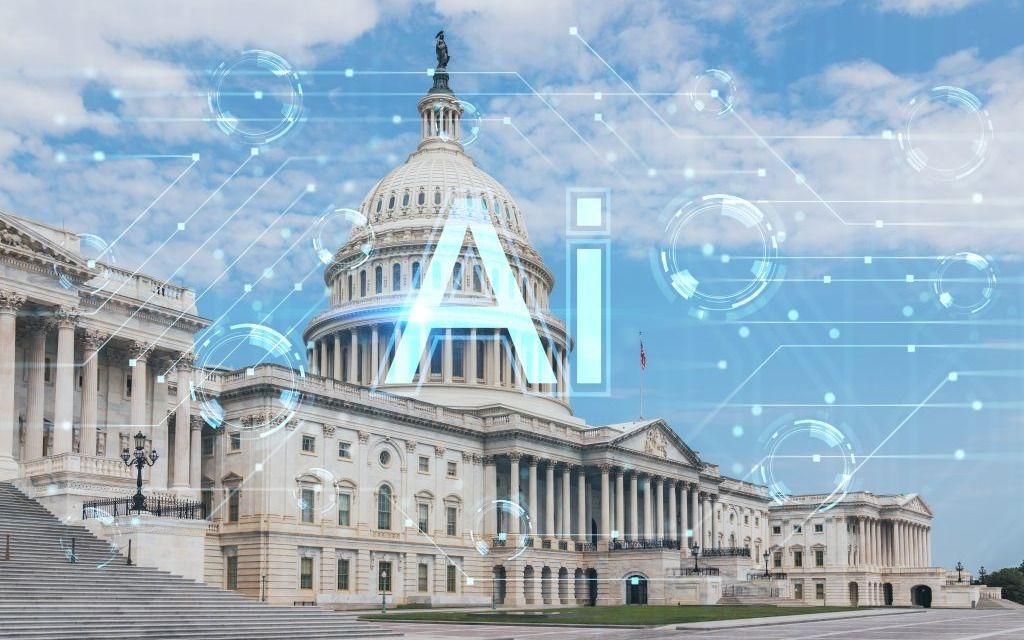
Following the previous report on the U.S. executive order on artificial intelligence, this section outlines complementary measures aligned with the initiative.
Following the previous report on the U.S. executive order on artificial intelligence, this section outlines complementary measures aligned with the initiative.
As noted earlier, the first U.S. executive order on AI has recently been introduced. The directive requires major technology companies to share safety testing results with the federal government prior to the public release of AI systems. It also prioritizes the development of standards by the National Institute of Standards and Technology (NIST), including stress-testing protocols to identify vulnerabilities and potential risks in AI systems. In addition, the United States Department of Commerce is tasked with establishing standards for labeling AI-generated content.
The order further addresses training data for large-scale AI systems, calling for evaluations of how federal agencies collect and use commercially available data—such as data purchased from brokers—particularly when such data includes personally identifiable information. Moreover, the Biden administration is taking steps to strengthen the AI workforce. Professionals with expertise in AI can explore related opportunities via AI.gov. According to a senior U.S. official, the most “aggressive” implementation timelines for certain safety and security aspects of the order begin within 90 days, while other components may take up to a year to fully materialize.
The executive order builds upon a series of measures undertaken by the White House in recent months to foster dialogue on the rapid development of AI and to propose guiding frameworks.
According to a study by UBS, the rapid expansion of ChatGPT since November 2022—becoming the fastest-growing consumer application in history within two months—has contributed to rising public concern, legal disputes, and increased scrutiny from lawmakers. For instance, shortly after Microsoft integrated ChatGPT into its Bing search engine, it faced criticism over inaccurate or inappropriate outputs. Similarly, widely used AI image generators have been criticized for racial bias and the reinforcement of stereotypes.
The executive order directs the United States Department of Justice and other federal bodies to develop standards for the “investigation and prosecution of AI-related civil rights violations.” It also mandates the issuance of clear guidance to federal landlords, stakeholders, and contractors to prevent the use of AI algorithms that may exacerbate discrimination.
In August, the White House challenged thousands of hackers and security researchers to test leading AI systems developed by major companies including OpenAI, Google, Microsoft, Meta, and NVIDIA. This initiative took place as part of DEF CON, the world’s largest hacking conference.
A representative from the White House Office of Science and Technology Policy described the event as the first public evaluation of multiple large language models.
The competition followed a July meeting between the White House and seven leading AI companies, including Alphabet Inc., Microsoft, OpenAI, Amazon, Anthropic, Inflection AI, and Meta. These firms agreed to a set of voluntary commitments, including allowing independent experts to evaluate their systems before public deployment, researching societal risks associated with AI, and permitting third-party testing for system vulnerabilities through events such as DEF CON.
Criticisms of the executive order will be addressed in subsequent sections.
Similar news



Comments
0 Comment
Most visited news



Latest articles
Contact us

All rights are reserved for the Center of Contemporary Jurisprudence, Islamic Seminary - Iran - Copyright
۰ Comment