

20 Oct 2023
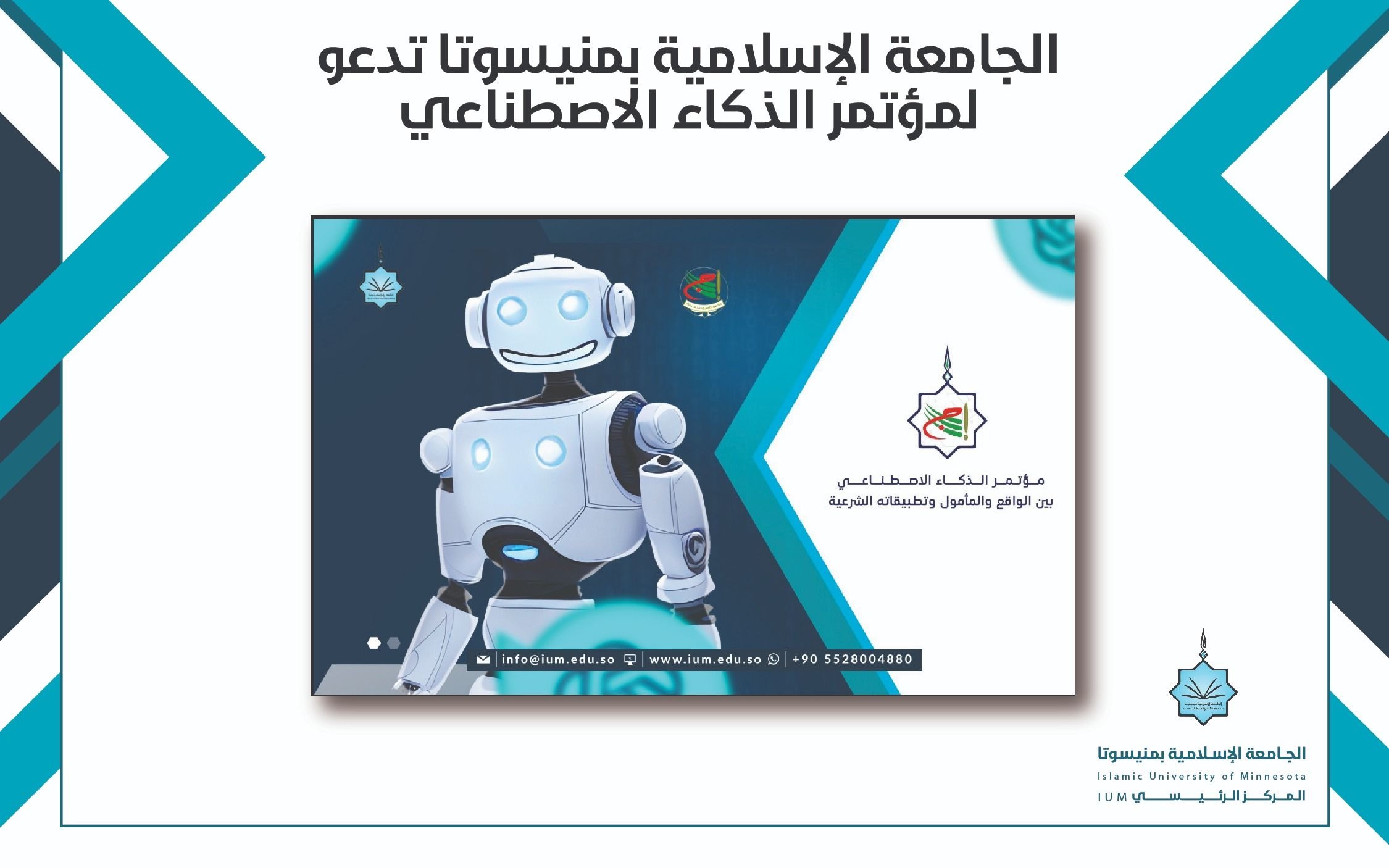
AI and Ethical & Jurisprudential Responsibility Conference
The Islamic University of Minnesota is organizing a conference dedicated to Artificial Intelligence (AI) and Ethical and Jurisprudential Responsibility.
Artificial intelligence emerged in the mid-twentieth century, alongside developments that later became known as computers. In subsequent years, the ENIAC was built as the first fully electronic general-purpose computer. Since 2010, AI technologies have accelerated significantly due to massive increases in processor storage capacity, faster data flow between networked computers, enhanced computational speed and power and reduced costs.
Today, AI occupies an increasingly central place in our societies. The ability to process enormous volumes of information is both promising and concerning, as AI systems simulate many human cognitive functions. These concerns stem from potential risks AI may pose to human society—such as the future role of humans in the workforce, the scope of AI-generated outputs, and the broader societal impact of intelligent systems.
AI is widely regarded as one of the most significant technological advancements of the modern era. It may be defined as a collection of techniques and tools that use computation and programming to model and simulate human intelligence.
AI can solve problems once considered intractable through traditional methods and presents new opportunities to enhance human life computationally. It can improve safety and security systems—such as tracking stolen vehicles or identifying objects—and accelerate scientific and technological discoveries across various fields.
Central Question of the Conference
The conference seeks to address:
- How can artificial intelligence be used responsibly, ethically, and in accordance with Islamic law?
- What is its role in jurisprudence (fiqh), and what are its limits in the digitalization of Qur’anic interpretation and Hadith analysis?
- How do the objectives of Sharia (Maqāṣid al-Sharīʿa) frame the ethical and legal parameters of AI?
- What are the challenges of applying AI technologies?
- What ethical rulings are associated with its use?
- What role does education play in empowering individuals and societies to use AI safely?
Researchers and scholars in the field are invited to participate, with the aim of fostering dialogue, exchanging expertise, and promoting mutual learning.
Conference Themes
Chapter One: Artificial Intelligence from a Conceptual Perspective
- AI terminology between law and technology in light of objectives and values
- The scope of AI responsibility
- Legal consequences of AI use
- AI in light of juristic principles and semantic analysis
- AI from the perspective of the higher objectives of Islam (Maqāṣid al-Sharīʿa)
Chapter Two: Artificial Intelligence and Legal Applications
- AI and its role in fiqh
- The role and limits of AI techniques in the digitalization of the Holy Qur’an
- AI in monitoring and deriving rulings from Hadith
- The impact of AI-based statistical analysis algorithms in light of Sharia objectives
- The role of AI technologies in contemporary juristic issues
Chapter Three: AI Applications — Reality and Prospects
- Benefits and challenges of AI technology development
- Legal, social, and economic implications of AI-driven technological progress
- Research and development prospects in AI and its future applications
- Challenges of deploying AI technologies in healthcare, medicine, agriculture, and industry
- Current and future innovations in AI, including deep neural networks, deep learning, and voice, image, and text recognition technologies
- The vital role of cloud computing and big data in supporting and advancing AI technologies
Chapter Four: Regulatory and Ethical Governance of AI Technologies
- Ethics and responsibility in the growing use of AI
- Security and privacy challenges arising from AI technologies
- Global efforts to regulate AI use and ensure safe deployment
- The vital role of education in enabling effective and secure AI usage
For more information, please visit the official conference page.
* In 1943, physicist John William Mauchly, in collaboration with electrical engineer J. Presper Eckert, began building the first general-purpose electronic computer, later named ENIAC (Electronic Numerical Integrator and Computer).
Similar news




Comments
0 Comment
Most visited news


Latest articles
Contact us

All rights are reserved for the Center of Contemporary Jurisprudence, Islamic Seminary - Iran - Copyright
۰ Comment