

13 Dec 2023
Rethinking Precaution in Life, Blood, and Honor
Critical re-assessment on the principles of precaution (iḥtiyāṭ) in matters of furūj (sexual relations), dimāʾ (blood/life), and nufūs (human lives)
The principle of the necessity of precaution (iḥtiyāṭ) in matters of furūj (sexual relations), dimāʾ (blood/life), and nufūs (human lives) has, at first glance, been widely accepted among fuqahāʾ (jurists) and uṣūlīs (legal theorists). Even those who generally uphold the principle of barāʾa in primary doubts (shubuhāt badawiyya) often maintain that in these three domains, precaution must prevail, and that the practical duty of the mukallaf (legally responsible individual) is to act in accordance with precaution.
To clarify this position the following should be addressed:
- Some scholars argue that in highly sensitive matters—such as sexual relations, bloodshed, and the protection of believers’ lives—barāʾa does not apply, even after exhaustive inquiry. The gravity of these issues, and the evident (ihtimām al-shāriʿ, i.e., the Lawgiver’s intense concern), necessitate precaution. This applies across transmitted (naqlī) and rational (ʿaqlī) forms of barāʾa, as well as according to the practice of (ʿuqalāʾ, rational people), who are understood to exercise caution in critical matters.
- In discussions of non-conclusive legal principles (uṣūl ghayr muḥrizah), such as precaution in matters of property, life, and honor, it is argued that although reality (wāqiʿ) remains unknown, the obligation of precaution—being a ṭarīqī (instrumental) ruling rooted in the Lawgiver’s concern—renders liability (ʿiqāb) valid upon (violation).
- In judicial contexts, particularly where suspicion arises in testimony or claims, precaution is likewise deemed necessary in matters involving life and property.
- Furthermore, some jurists extend this reasoning to modern (emerging issues), such as artificial insemination, arguing that the rationale behind precaution in nikāḥ (marriage) and lineage—namely, the preservation of (progeny)—requires precaution in such cases as well, thereby precluding recourse to barāʾa.
Critical Re-assessment
Despite its apparent consensus, this principle has been subject to critical reassessment by a number of contemporary scholars.
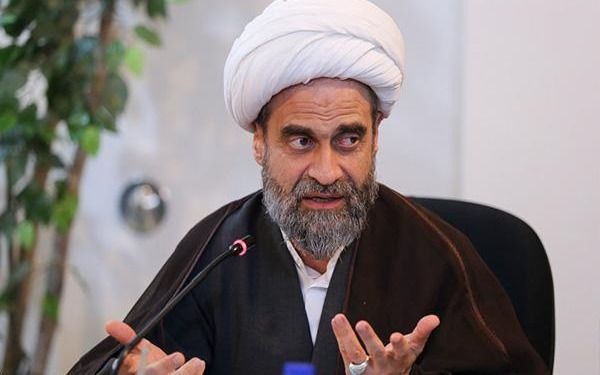
Among them, Ustad Ayatollah Qāʾinī rejects the notion that precaution in these domains is obligatory. He maintains that iḥtiyāṭ is not a binding requirement but rather a commendable practice. In his lectures on medical fiqh and in his work on al-Mabsūṭ fī al-Fiqh al-Masāʾil al-Muʿāṣira, he examines this principle in detail and ultimately limits its applicability.
According to his view, precaution in furūj is only warranted where the possibility of prohibition arises from doubt regarding the validity of marriage or contractual union. He states: “The certain scope of precaution in matters of furūj is limited to cases where the possibility of prohibition stems from the invalidity of marriage or contract. However, if the possibility arises from other factors—such as the possibility of menstruation—then the inclusion of such cases under the general proof of emphasized precaution is questionable, if not untenable.”
Accordingly, in other contemporary cases—such as artificial insemination—precaution does not inherently apply.
Parallel Critiques
This restrictive view is not unique. Other prominent uṣūlīs, including Ākhund al-Khurāsānī, similarly reject the obligation of precaution in these matters, affirming instead that “Precaution is, in all cases, inherently good (ḥasan), whether in critical matters such as blood and sexual relations or otherwise”, without necessarily implying obligation.
Sources
- Anwār al-Uṣūl, vol. 3, p. 199
- Ajwad al-Taqrīrāt, vol. 2, p. 11
- Anwār al-Fiqāha, p. 251
- al-Buḥūth al-Hāmma fī al-Makāsib al-Muḥarrama, vol. 3, p. 166
- al-Mabsūṭ fī al-Fiqh al-Masāʾil al-Muʿāṣira, vol. 1, p. 296
- Lecture notes on medical fiqh (Ustad Qāʾinī)
- Kifāyat al-Uṣūl, p. 354
Similar news



Comments
0 Comment
Most visited news



Latest articles
Contact us

All rights are reserved for the Center of Contemporary Jurisprudence, Islamic Seminary - Iran - Copyright
۰ Comment