

09 Dec 2023
Assessing Reliability of Key Hadith Transmitters
Review on several rijālī discussions raised in sessions of Ayatollah Ahmad Abedi’s advanced lectures (darse kharej) on Contemporary Issues in Judiciary
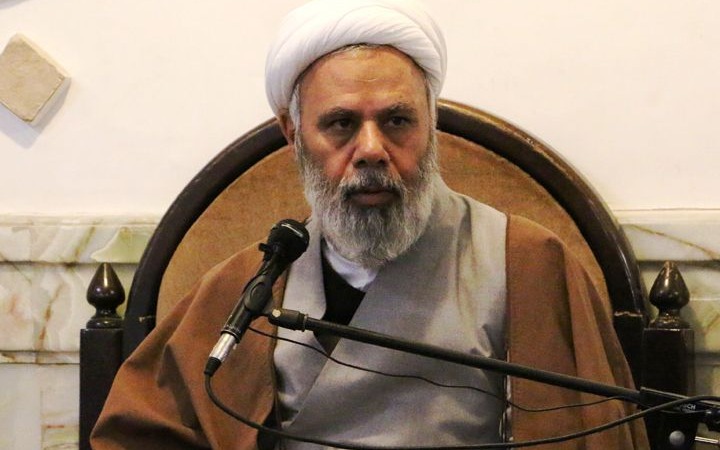
This report reviews several rijālī discussions raised in sessions 17 and 18 of Ayatollah Ahmad Abedi’s advanced lectures (darse kharej) on “Contemporary Issues in Judiciary (Masāʾil al-Qaḍāʾ al-Mustahdatha).”
1. First Point: The Reliability of Sahl b. Ziyād
There is notable disagreement among rijāl scholars regarding the reliability (wathāqa) of Sahl b. Ziyād. For instance:
- Ibn al-Ghaḍāʾirī describes him as (weak) and (doctrinally unsound).
- Al-Kashshī considers him a (extremist).
- Al-Najāshī likewise deems him weak.
Ayatollah Abedi, however, argues in favor of establishing his reliability. He bases this on the (frequency of transmission) by al-Kulaynī, stating:
“One-quarter of al-Kāfī consists of narrations transmitted from Sahl b. Ziyād. That al-Kulaynī relied on him to this extent indicates his (trust), and such trust amounts to (authentication). Therefore, Sahl ibn. Ziyād is (reliable), and the rest of the transmitters are also trustworthy.”
2. Second Point: The Status of al-Sakūnī
Another debated transmitter is Ismāʿīl b. Abī Ziyād al-Sakūnī, commonly known as “al-Sakūnī.” Despite discussions over his (reliability), his narrations are generally treated as (reliable).
Ayatollah Abedi notes an important indicator regarding his Sunni background:
“Al-Sakūnī is Sunni and typically does not refer to Abī ʿAbd Allāh (Imam al-Ṣādiq)’; rather, he reports ‘from Jaʿfar, from his father, from his forefathers.’ Whenever a hadith explicitly names an Imam and traces the chain through his forefathers, it suggests the narrator is Sunni—similar to the Hadith al-Silsila al-Dhahab. In this case, however, al-Sakūnī reports ‘from Abī ʿAbd Allāh,’ which raises the (possibility) of textual alteration—i.e., ‘from Jaʿfar’ being changed to ‘from Abī ʿAbd Allāh.’ In any case, Imam al-Ṣādiq narrates from Amīr al-Muʾminīn.”
3. Third Point: On Abān ibn. ʿUthmān
This section addresses two issues concerning Abān ibn. ʿUthmān:
First Issue:
Ayatollah Abedi notes that al-Kashshī counts him among the Aṣḥāb al-Ijmāʿ (a group of transmitters whose narrations are broadly accepted), which appears to conflict with the view of al-ʿAllāma al-Ḥillī.
However, upon closer examination:
- Al-Kashshī (p. 673) explicitly includes him among the Aṣḥāb al-Ijmāʿ.
- Al-ʿAllāma al-Ḥillī states:
“The stronger view for me is the acceptance of his narrations, even if his doctrine is unsound, due to the aforementioned consensus.” (Rijāl al-ʿAllāma al-Ḥillī, p. 22).
Thus, no real contradiction exists between the two positions. It is worth noting that al-Astarābādī, in Manhaj al-Maqāl fī Taḥqīq Aḥwāl al-Rijāl, reports that al-Ḥillī’s son quoted a view from his father questioning Abān’s reliability.
Second Issue:
Ayatollah Abedi further argues:
“Abān transmits several narrations from Abī al-Ḥasan, which most likely refers to Mūsā ibn Jaʿfar. A Nāwūsī (a sect denying the death of Imam al-Kāẓim) would not narrate from him. Therefore, it is highly probable that the attribution ‘Abān was Nāwūsī’ is mistaken, and the correct reading is ‘Abān was Qādisī,’ meaning he was from the Nahāvand region.”
He supports this with two points:
- Abān narrates from Mūsā ibn Jaʿfar.
- Al-Kashshī reports a consensus on the acceptance of his narrations.
Accordingly, Ayatollah Abedi concludes that the positions of al-ʿAllāma al-Ḥillī and Fakhr al-Muḥaqqiqīn rejecting this interpretation are not persuasive.
Sources:
Similar news



Comments
0 Comment
Most visited news



Latest articles
Contact us

All rights are reserved for the Center of Contemporary Jurisprudence, Islamic Seminary - Iran - Copyright
۰ Comment