

13 Jan 2021
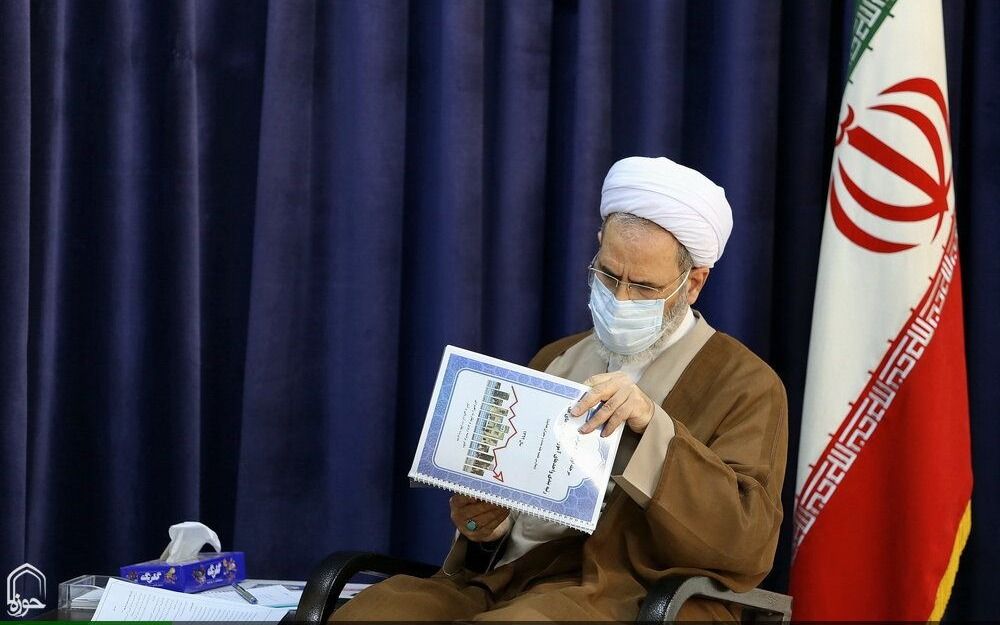
Important Letter from Prominent Scholars to Ayatollah Aʿrāfī
Thirty-five leading scholars, senior academic administrators, and policy-making figures have declared their support and interest in a letter to Ayatollah Aʿrāfī
The pace of news related to ijtihād developments in the Hawza seminaries has been accelerating steadily. Owing to the thoughtful and strategic groundwork laid in recent years, the Hawza is now increasingly emerging as a hub for the exchange of up-to-date scholarly ideas and theories.
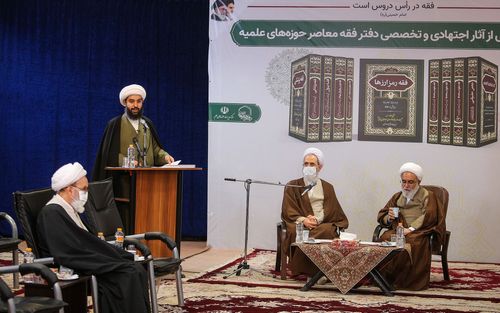
Following the publication of reports on Contemporary Fiqh Dars-e Khārij courses and the scholarly initiatives of the Centre for Contemporary Fiqh, a notably positive response has been observed among academic and elite circles, both within and beyond the Hawza community.
In this context, 35 senior figures in scientific management, legislation, and policy-making, together with professors and graduates of leading domestic and international universities, addressed a significant letter to the Head of the Hawza Seminaries. By declaring their support and interest in collaboration across specialized fields related to contemporary fiqh, they effectively opened a new chapter in joint research cooperation.
These signatories—recognized national experts and managers in fields such as economics, computer science, information technology and artificial intelligence, law, physics, philosophy of science, cyberspace and social networks, cryptocurrencies, entrepreneurship, management, investment, and governance—highlighted, in their letter, a critical assessment of previous models of Hawza–university collaboration. They also presented concrete proposals and announced their readiness to cooperate in transferring the world’s most up-to-date specialized knowledge to Hawza professors and jurists. This initiative lays an important foundation for more far-reaching scholarly engagement by the Hawza in shaping contemporary academic discourse—an effort that could contribute to a brighter scientific future in the “Second Phase/Step of the Islamic Revolution.”
Text of the Letter
In the Name of God, the Most Compassionate, the Most Merciful
To His Eminence Ayatollah Aʿrāfī (dāma ʿizzuhu — may his honor endure)
Head of the Hawza Seminaries
With greetings and respect,
We respectfully wish to note that the recent news reports regarding the official launch of 15 Dars-e Khārij courses in Contemporary Fiqh, addressing key issues required by the scholarly community and taught by well-known Hawza professors and mujtahids, have attracted considerable attention and are of great importance.
The significance of this initiative is further amplified by the fact that, based on information available to university professors and specialists cooperating with the Centre for Contemporary Jurisprudence (Fiqh), several of these courses have devoted serious attention to identifying and engaging with the most up-to-date scientific theories. This specialized approach reflects the firm resolve and deep intellectual foundations of this longstanding institution in influencing contemporary scholarly discourse.
Although, over many years, various educational centers in both the Hawza and universities have offered suitable interdisciplinary training programs, what has received comparatively less attention has been a focus on joint Hawza–university research, rather than education-centered approaches. The experiences of Iran and other countries demonstrate that the production of high-caliber knowledge and the resolution of complex issues typically emerge from research-based programs in which distinguished specialists from different disciplines engage in long-term, structured collaboration on specialized topics.
The recent initiative of the Hawza seminaries toward joint research pathways heralds the beginning of a new phase in advancing Iran’s scholarly production. A distinctive feature of this movement is the central role of Dars-e Khārij instructors, which has the potential to generate a genuine scientific leap forward.
Given that ijtihād-based research on contemporary issues is among the country’s essential needs—requiring comprehensive and in-depth Hawza–university collaboration—the launch of these courses presents an excellent opportunity to implement joint research projects with this orientation. Such cooperation may take shape through scholarly groups centered on Contemporary Fiqh Dars-e Khārij courses and specialized academic schools.
As part of the university research community, the undersigned welcome the Hawza’s recent approach and, should the necessary conditions be provided, stand ready to contribute our capacities to the production of high-quality joint scholarly works suitable for presentation in both national and international academic forums.
Signatories
- Mohammad-Baqer Asghari Agha-Mashhadi – PhD (Joint Doctorate) in Information Technology Law, Tilburg University (Netherlands) and University of Bologna (Italy); Visiting Professor of Startup Law, Knowledge-Based Companies Law, and Technology Law at the Department of Law, Shahid Beheshti University; specialist in technology law, intellectual property, and investment.
- Sayyid Mohammad-Sadeq Emamian – PhD in Public Policy and Governance, Science, Technology and Innovation Studies Institute, School of Social and Political Science, University of Edinburgh (UK); Founder and Chairman of the Board of the Sharif Governance Think Tank; Head of the Regulatory Organization for Audio-Visual Media (SATRA).
- Hamid Behroozi – PhD in Electrical Engineering (Telecommunications), Concordia University (Canada); Faculty Member, Sharif University of Technology; Head of Research and Development Center, Hamrah-e Aval (MCI).
- Siavash Bayat Sarmadi – PhD in Hardware Engineering, University of Waterloo (Canada); Faculty Member, Department of Computer Engineering, Sharif University of Technology.
- Sayyid Abbas Parhizkari – PhD in Economics, Shahid Beheshti University; Deputy Head of the Budget Office, Research Center of the Islamic Consultative Assembly (Parliament).
- Adel Peighami – PhD in Economics, Imam Sadiq University; Faculty Member and Vice President for Research and Technology, Imam Sadiq University; Member of the Economy and Justice Think Tanks of the Islamic–Iranian Model of Progress Center; Former Advisor to the Deputy Minister for Economic Affairs, Ministry of Economic Affairs and Finance; Member of the Specialized Commission on Economy, Commerce, and Management of the Supreme Council of the Cultural Revolution; Trustee of the Monetary and Banking Research Institute of the Central Bank of Iran.
- Iraj Tootonchian – PhD in Economics, Texas A&M University (USA); Former Deputy Minister for Economic and International Affairs, Ministry of Economic Affairs and Finance; Faculty Member, Alzahra University; specialist in Islamic monetary and banking studies.
- Marzieh Saqfian – PhD in Management, York University (Canada); Postdoctoral Researcher, Stanford University (USA).
- Sayyid Aqil Hosseini – PhD in Economics, University of Isfahan; Faculty Member, Yasuj University.
- Sayyid Mohammad-Hossein Hamidi – MSc in Cloud Computing and Entrepreneurship & Innovation, Technical University of Berlin (Germany), Rennes (France), and the European Institute of Innovation and Technology (EIT); Advisor to the CEOs of Rightel and Hamrah-e Aval; specialist in digital entrepreneurship and venture capital.
- Hamed Khanmirza – PhD in Computer Engineering, University of Tehran; Faculty Member, Department of Computer Engineering, K. N. Toosi University of Technology.
- Sayyid Hossein Khāsteh – PhD in Computer Engineering, Sharif University of Technology; Faculty Member, K. N. Toosi University of Technology; specialist in machine learning, blockchain, social networks, evolutionary algorithms, computational geometry, and multi-agent systems.
- Mohammad Khānsāri – PhD in Computer Engineering, Sharif University of Technology; Faculty Member, Faculty of New Sciences and Technologies, University of Tehran; Former Head of the Telecommunication Research Center of Iran.
- Amir Ahmad Zolfaghari – PhD in Economics, Allameh Tabataba’i University; Faculty Member, Department of Economics, Imam Sadiq University; Member of the Economics Group, Sharif University Governance Think Tank; Specialist in Islamic banking, market economics, and competition.
- Hamidreza Rabiei – PhD in Electrical and Computer Engineering, Purdue University (USA); Professor and Faculty Member, Sharif University of Technology; specialist in machine learning and statistical pattern recognition, multimedia networks, social network analysis; Founder and Head of the Advanced Information and Communication Technology Research Institute, Sharif University of Technology.
- Sayyid Ali Rouhani – PhD in Economics, University of Tehran; specialist in monetary economics; Deputy Head for Economic Affairs, Research Center of the Islamic Consultative Assembly.
- Morteza Zamanian – PhD in Economics, Bocconi University (Italy); Faculty Member, Department of Management, Amirkabir University of Technology; specialist in financial macroeconomics.
- Ebrahim Sūzanchi – PhD in Science, Technology, and Innovation Policy, University of Sussex (UK); Faculty Member, Department of Management and Economics, Sharif University of Technology; Deputy for Policy-Making and Strategic Oversight, Science and Technology Headquarters of the Supreme Council of the Cultural Revolution.
- Masoud Shadnam – PhD in Management, Simon Fraser University (Canada); Faculty Member, MacEwan University (Canada).
- Mohammad Sharifkhani – PhD in Electrical Engineering, University of Waterloo (Canada); Faculty Member, Sharif University of Technology; Chairman of the Board, Harakat-e Aval Company.
- Hossein Sameti – PhD in Electrical Engineering, University of Waterloo (Canada); Faculty Member, Department of Computer Engineering, Sharif University of Technology.
- Ali Sanaei – PhD in Political Science, University of Michigan (USA); Postdoctoral Fellow, University of California, Berkeley (USA); Faculty Member, Department of Economics and Political Science, Shahid Beheshti University.
- Sadeq Aliakbari – PhD in Computer Engineering, Sharif University of Technology; Faculty Member, Shahid Beheshti University (Tehran); specialist in data mining and social networks.
- Hossein Eyvazlou – PhD in Economics, Tarbiat Modares University; Faculty Member, Department of Economics, Imam Sadiq University; Head of the Political Economy Group at Imam Sadiq University; Director of the Banking System Reform Project, Ministry of Economic Affairs and Finance; Former Board Member, Export Development Bank of Iran.
- Mehdi Golshani – PhD in Physics, University of California, Berkeley (USA); Faculty Member, Sharif University of Technology; Founder of the Philosophy of Science Group at Sharif University of Technology; Former President of the Research Institute for Humanities and Cultural Studies; Distinguished Figure in Physics of the Islamic Republic of Iran; Member of the Academy of Sciences of the Islamic World; Member of the European Society for Science and Theology; Founding Member of the International Society for Science and Religion (UK).
- Mehdi Mohammadi – PhD in Technology Management, Allameh Tabataba’i University; Faculty Member, Department of Management, University of Tehran; Secretary of the Digital Economy and Smartization Technology Development Headquarters, Vice Presidency for Science and Technology.
- Abdolhamid Mo’arrefi-Mohammadi – PhD in Economics, University of Tehran; Faculty Member, Department of Economics, University of Isfahan.
- Mohammad Ali Maddah-Ali – PhD in Communication Systems, University of Waterloo (Canada); Faculty Member, Department of Electrical Engineering, Sharif University of Technology; specialist in blockchain and machine learning.
- Ali Maleki – PhD in Policy Studies, University of Edinburgh (Scotland); Faculty Member, Sharif University of Technology; Head of the Policy Research Institute, Sharif University of Technology; specialist in science and technology policy.
- Hossein Mirzapour – PhD in Management and Decision Sciences, Université de Montréal (Canada); Head of the Data Lab, Policy Research Institute, Sharif University of Technology; specialist in cyberspace and data management.
- Sayyid Reza Mirnezami – PhD in Economics (Canada); Faculty Member, Policy Research Institute, Sharif University of Technology.
- Mohammad Nemati – PhD in Economics, University of Tehran; Faculty Member and Director General for Research, Imam Sadiq University.
- Saman Herati-Zadeh – PhD in Artificial Intelligence, Sharif University of Technology (Iran); Faculty Member, University of Tehran; specialist in data mining.
- Mohammadreza Herati Nik – PhD in Information Technology Management, Allameh Tabataba’i University; Researcher in business development and innovation, process mining, and business intelligence; Innovation Center, RWTH Aachen University (Germany).
- Elham Yavari – PhD in Industrial Engineering, University of California, Berkeley (USA); Faculty Member, Tarbiat Modares University; Head of the Entrepreneurship Think Tank; President of the National Organization for the Development of Exceptional Talents (NODET / SAMPAD).
Similar news



Comments
0 Comment
Most visited news

Latest articles
Contact us

All rights are reserved for the Center of Contemporary Jurisprudence, Islamic Seminary - Iran - Copyright
۰ Comment