

25 Oct 2022
Fourth Sharjah International Conference on Islamic Economics
Fourth Sharjah International Conference on Islamic Economics: “Drafting Islamic Financial Transaction Provisions"
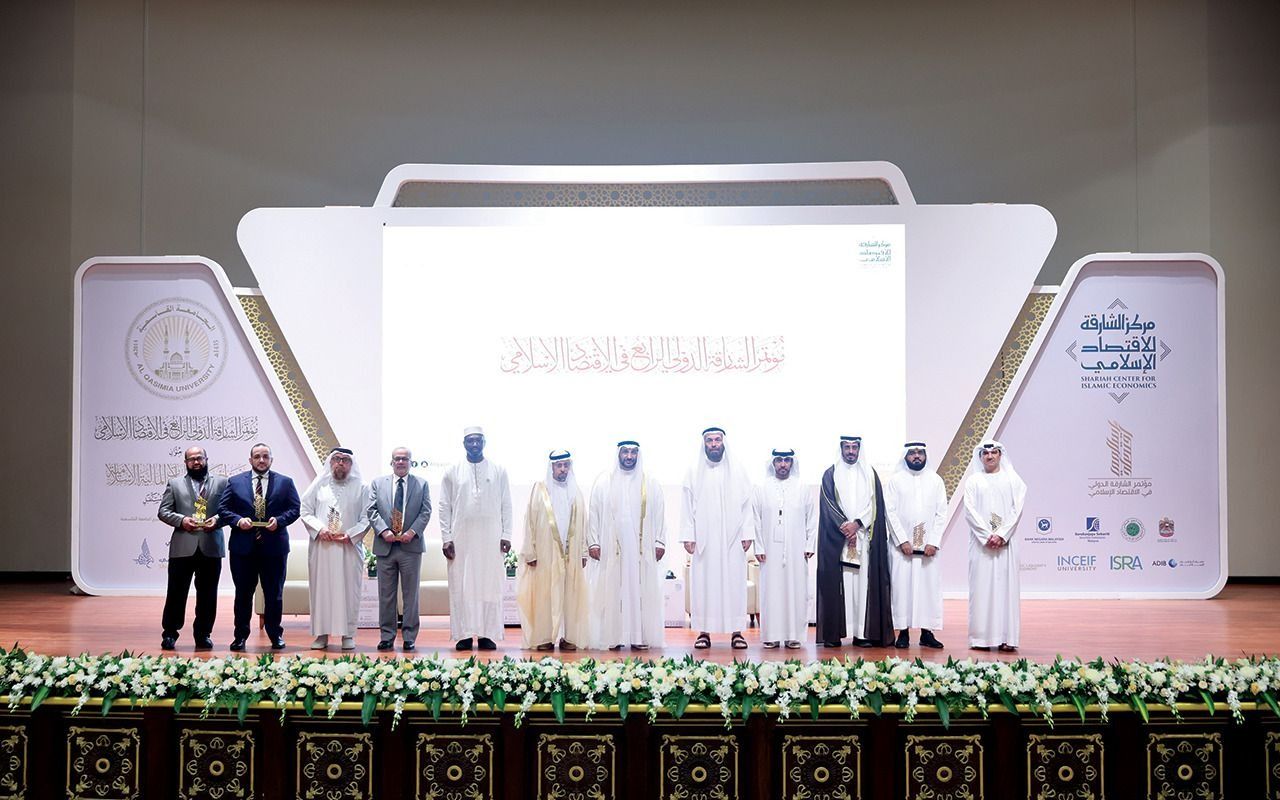
The Fourth Sharjah International Conference on Islamic Economics, “Drafting Islamic Financial Transaction Provisions: Practical and Forward-Looking Approaches”, was held by the Sharjah Center for Islamic Economics at Al Qasimia University.
According to Al Bayan, the two-day conference was inaugurated by Jamal Al Turaifi, President of Al Qasimia University, and Dr. Awad Al Khalaf, Director of the University, with the participation of heads and directors of centers as well as faculty members from colleges and universities. The conference hosted elite groups of researchers and specialists in Islamic economics and banking, chaired by Sheikh Abdullah Al-Manea, member of the Council of Senior Scholars and advisor to the Saudi Royal Court; Dr. Mohammed Al-Qari, expert at the International Islamic Fiqh Academy; Dr. Qutb Mustafa Sano, Secretary-General of the Islamic Fiqh Academy; along with a number of researchers in Sharia, legal, and economic fields. The conference aimed to present diverse local and international solutions for the growth of the Islamic financial industry within an Islamic framework, drawing on the insights of Sharia and legal experts.
Dr. Awad Al Khalaf emphasized the University’s commitment to linking academic research with community service and organizing scholarly conferences that advance this mission. He highlighted the significance of the conference theme, particularly the drafting of provisions governing Islamic financial transactions.
In his address, Dr. Ibrahim Al Mansouri, Director of the Sharjah Center for Islamic Economics at Al Qasimia University, presented statistics on participation in the conference. He stated that more than 100 applicants from approximately 27 countries, representing 82 academic and research institutions, submitted their studies for consideration. Following evaluation by the review committee, 21 papers were accepted for presentation in the conference’s scientific sessions.
Dr. Ahmed Al Haddad noted the substantial growth witnessed in Islamic banking, stating that Islamic assets have surpassed USD 2.43 trillion.
Sheikh Abdullah Al-Manea underscored the importance of the conference’s theme and the role of jurists (faqihs) and scholars in enriching discussions on Islamic finance, adding that the development of and solutions to challenges in Islamic financial transactions require sustained study, commitment, and follow-up.
Dr. Qutb Mustafa Sano, Secretary-General of the Islamic Fiqh Academy, stressed the importance of the conference in fostering economic unity among Islamic countries.
Subsequently, Jamal Al Turaifi, President of the University, accompanied by Dr. Awad Al Khalaf, honored Sharjah Islamic Bank and participating figures, including researchers and contributing institutions.
The conference featured three main tracks. The first focused on drafting provisions for Islamic transactions, addressing challenges and future outlooks. The second examined contemporary experiences in formulating regulations for Islamic financial exchanges and the role of governments and responsible authorities. The third and fourth scientific sessions were dedicated to the presentation of scholarly research on various issues related to the formulation of Islamic financial rulings.
Similar news
Comments
0 Comment
Most visited news


Latest articles
Contact us

All rights are reserved for the Center of Contemporary Jurisprudence, Islamic Seminary - Iran - Copyright
۰ Comment