

15 Mar 2023
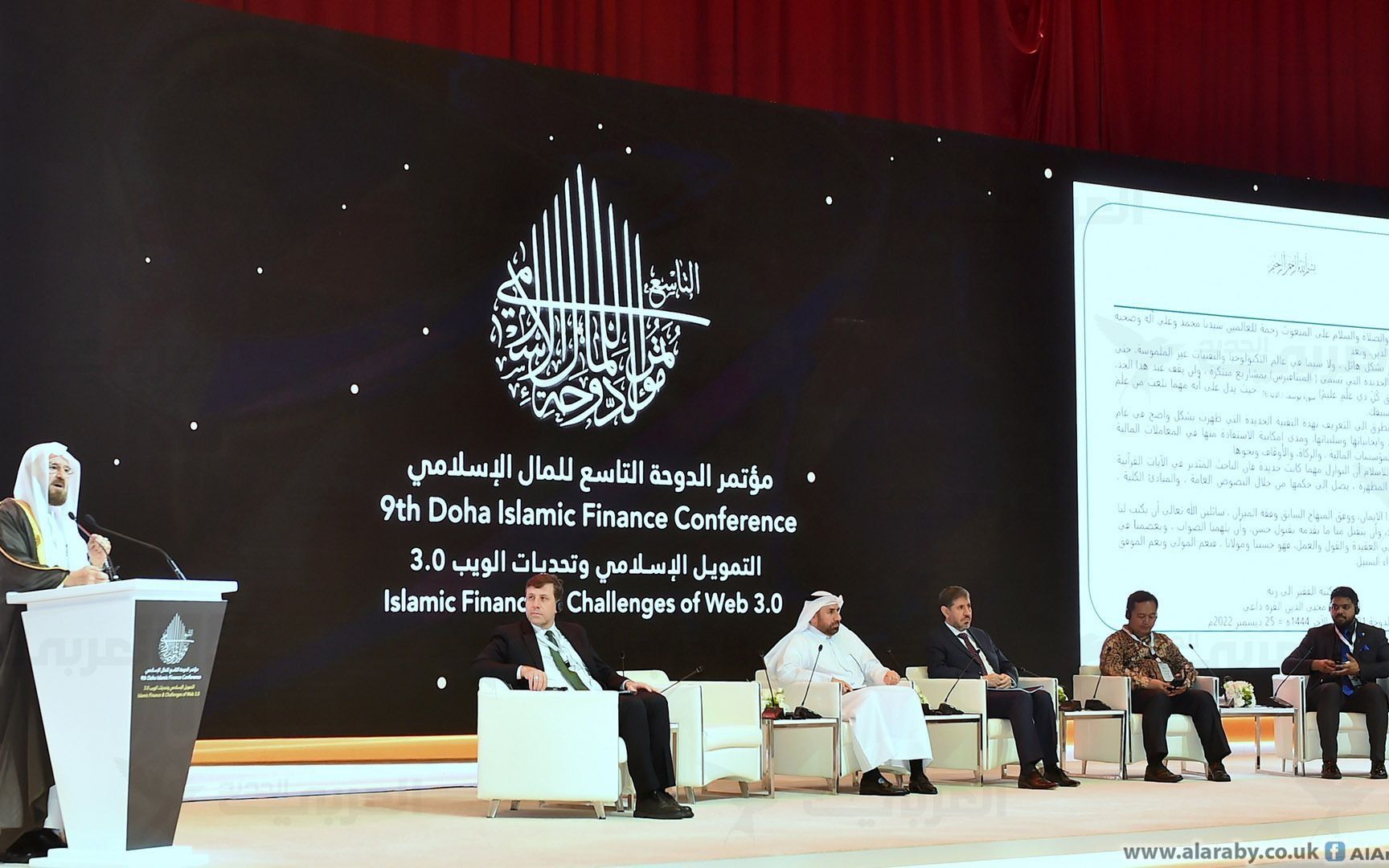
Ninth Doha Islamic Finance Conference Concludes
The 9th Doha Islamic Finance Conference concluded Tuesday by recommending the development of virtual financial products and strategic engagement with metaverse
According to Al-Araby Al-Jadeed, the closing statement urged enhanced cooperation between scholars and researchers to design Shariah-compliant virtual products and services, with the aim of accelerating technological adoption among Islamic financial service providers. It also emphasized continued collaboration to develop smart applications delivering financial solutions aligned with Islamic principles.
Participants called on all those involved to work toward offering financial services consistent with an Islamic lifestyle as viable alternatives to interest-based applications promoted by major global technology firms.
The statement affirmed that financial transactions conducted in virtual environments using blockchain technology do not inherently conflict with the principles of Islamic fiqh, provided that contractual commitment and transfer of ownership over assets recognized as valuable by customary standards are properly established. It further deemed permissible the trading of beneficial virtual assets or tokens, noting that such transactions—like any contract—must fulfill their essential pillars (arkān) and conditions (shurūṭ) and remain free of legal prohibitions.
The communiqué stressed that regulating financial transactions within the metaverse requires adherence to established contractual rules, both legally and ethically, ensuring that the subject matter and effects of contracts are genuine—even if not physically tangible.
Islamic financial institutions were encouraged to leverage metaverse technologies to access new markets and sectors, enhance growth opportunities, and adopt regulatory technology (RegTech) frameworks to improve operational performance, transparency, and competitiveness.
The statement also called on waqf (Islamic endowment) institutions to establish dedicated virtual spaces for endowments and to integrate metaverse-based solutions into waqf operations. Such measures, it noted, would enhance transparency and efficiency in fundraising and asset management while enabling more effective governance and oversight through advanced technologies.
Highlighting the potential of artificial intelligence and virtual reality applications, the conference underscored their possible role in strengthening Shariah governance mechanisms within Islamic financial institutions. It further stressed the need for cooperation among relevant authorities to establish unified technological and regulatory standards.
In addition, Islamic financial institutions were encouraged to develop their own virtual platforms to introduce Islamic financial products and promote the broader Islamic economic and financial ecosystem, while partnering with educational institutions to advance training and academic development in this field.
The Ninth Doha Islamic Finance Conference, held under the theme “Islamic Finance Issues and the Challenges of Web 3.0,” recommended deeper Shariah and legal studies on metaverse to formulate practical solutions enabling countries and institutions to benefit from this emerging digital sphere.
Comments
0 Comment
Most visited news

Latest articles
Contact us

All rights are reserved for the Center of Contemporary Jurisprudence, Islamic Seminary - Iran - Copyright
۰ Comment