

22 Mar 2026
AI and Islamic Finance Converge at IAIF’s 11th Annual Conference
AI is fundamentally “redefining the infrastructure of financial systems” and AI should be used within the framework of Sharia principles and economic justice
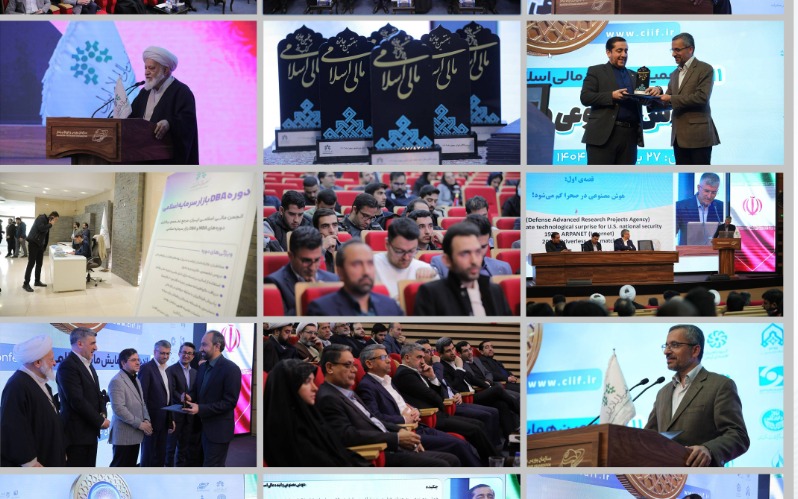
TEHRAN — The 11th Islamic Finance Conference, organized by the Iranian Association of Islamic Finance (IAIF), brought together leading scholars, policymakers, regulators, and financial experts to explore the transformative role of artificial intelligence in the future of Islamic finance.
Held under the theme “Artificial Intelligence and the Future of Islamic Finance,” the conference examined how rapidly advancing technologies are reshaping financial systems rooted in centuries-old Sharia principles, while also addressing broader economic and regulatory challenges facing Iran’s financial sector.
Opening the conference, on 15th of February 2025, Dr. Ali Salehabadi, Head of the IAIF, described artificial intelligence as an unavoidable reality rather than a distant innovation. He emphasized that AI is fundamentally “redefining the infrastructure of financial systems”, arguing that the central challenge is no longer whether institutions should adopt AI, but how to ensure it develops within the framework of Sharia principles and economic justice.
That warning was reinforced by Dr. Mehran Mohammadian, Advisor to the Governor of the Central Bank of Iran, who described the pace of technological change as “breathtaking.” Comparing the current moment to the early rise of the internet, he argued that society is only seeing “the tip of the iceberg” in terms of AI’s capabilities and warned that countries or organizations that fail to adapt risk significant economic losses.
Mohammadian suggested that the world is rapidly approaching a technological “singularity point,” where the distinction between human and machine-generated decisions is becoming increasingly blurred, fundamentally altering governance, policy-making, and economic management.
While discussions focused heavily on emerging technology, conference speakers also highlighted the structural resilience of Iran’s Islamic capital market.
Hojjatollah Seidi, Head of the Securities and Exchange Organization of Iran (SEO), pointed to the market’s reliance on real assets as a key source of stability amid inflation, political uncertainty, and systemic economic pressures. According to Seidi, Islamic financial systems possess a distinct advantage because they are tied to tangible economic activity, limiting speculative bubbles and distributing risk more rationally across the market. He also noted that Islamic finance has evolved beyond a narrow compliance-based approach into a broader framework centered on trust, sustainability, and resilience.
He credited the flexibility of Shia jurisprudence and the work of the SEO’s Shariah Committee for enabling the development of innovative financial instruments capable of adapting to modern economic realities without compromising religious principles.
Inflation and Budget Deficits Remain Central Concerns
Gholamreza Mesbahi Moghaddam, Head of the Shariah Committee of the SEO and member of the Expediency Discernment Council, argued that persistent budget deficits remain the primary driver of inflation, which has exceeded 45 percent in recent years.
He said sustainable inflation control would be impossible without balancing government expenditures and revenues, describing the government’s contractionary budget policy as a difficult but necessary measure.
Mesbahi Moghaddam also stressed that achieving the 8 percent growth target outlined in Iran’s Seventh Development Plan would require significantly greater public participation in investment. Among the tools proposed to mobilize public capital were Gold Certificates, designed to absorb excess liquidity while protecting household savings against inflation, and the creation of currency funds aimed at channeling an estimated $70 billion in privately held foreign currency and gold into productive sectors of the economy.
AI Applications in Islamic Banking
Several presentations focused on the direct application of AI in Islamic banking operations.
Dr. Hossein Meysami, faculty member at the Monetary and Banking Research Institute and Secretary of the Sharia Council of the Central Bank, argued that legal and jurisprudential systems often lag behind technological innovation. He warned that delaying AI adoption could leave the banking sector burdened by the costs of technological change without benefiting from its advantages.
Meysami proposed several practical applications for AI, including intelligent Sharia supervision systems capable of assisting human regulators in monitoring banking operations and ensuring compliance with Islamic governance standards.
He also emphasized the potential for AI to improve customer understanding of Islamic financial contracts by providing personalized explanations tailored to individual users, reducing the risk of fictitious or improperly understood agreements that may violate Sharia principles.
Additional applications discussed included automated implementation of Sharia Council decisions, personalized educational tools, support for extracting jurisprudential rulings, and customized profit-rate mechanisms aimed at replacing rigid uniform banking structures.
Speakers repeatedly warned that regulatory systems must evolve quickly to keep pace with technological change. Dr. Hossein Fahimi, board member of the IAIF, stressed that AI represents not only a technological issue but also a matter of economic justice and public responsibility.
Referencing both the 2008 global financial crisis and recent episodes of volatility in Iranian markets, Fahimi cautioned that inadequate supervision of AI-driven financial activity could create widespread economic harm.
Rather than resisting technological development, he called for “intelligent regulation” capable of encouraging innovation while simultaneously protecting investors and ensuring market transparency.
He also argued that Islamic jurisprudential principles such as Itlaf (causing loss) and No Harm could serve as foundations for determining legal responsibility in cases involving AI systems.
Dr. Mehdi Nouri, Head of the Institute for Economic Research and Development at the University of Tehran, echoed those concerns, saying regulators must abandon traditional supervisory models in favor of agile, data-driven oversight mechanisms.
Nouri highlighted both the opportunities and risks associated with AI, including algorithmic trading, fraud detection, risk management, privacy concerns, and increased market volatility. He also emphasized the importance of regulatory sandboxes as controlled environments where regulators and private firms can safely test emerging technologies.
Awards
The conference concluded with the presentation of the 11th Islamic Finance Awards, recognizing outstanding contributions to research and innovation in the sector.
- The award for “Top Islamic Finance Institution of the Year 1404 (2025)” and the prestigious Dr. Mousavian Award were presented to the Iran Mercantile Exchange for its role in developing financial instruments and strengthening links between capital markets and the real economy.
- Mesbahi Moghaddam received the “Top Islamic Finance Book” award for his publication Jurisprudence of the Capital Market.
- Awards were also presented to researchers and graduate students for work focusing on insider information in capital markets, leveraged funds, banking structures, market-making mechanisms, intelligent supervision systems, and AI-related bias in Islamic finance studies.
- Majid Pouyanmehr was named the “Top Individual in the Field of Islamic Finance,” receiving the 7th Dr. Abbas Mousavian Award for his contributions to the industry.
Comments
0 Comment
Most visited news

Latest articles
Contact us

All rights are reserved for the Center of Contemporary Jurisprudence, Islamic Seminary - Iran - Copyright
۰ Comment