

10 May 2025
Scholarly Works of Great Figures are a Precious Asset for Contemporary Islamic Jurisprudence
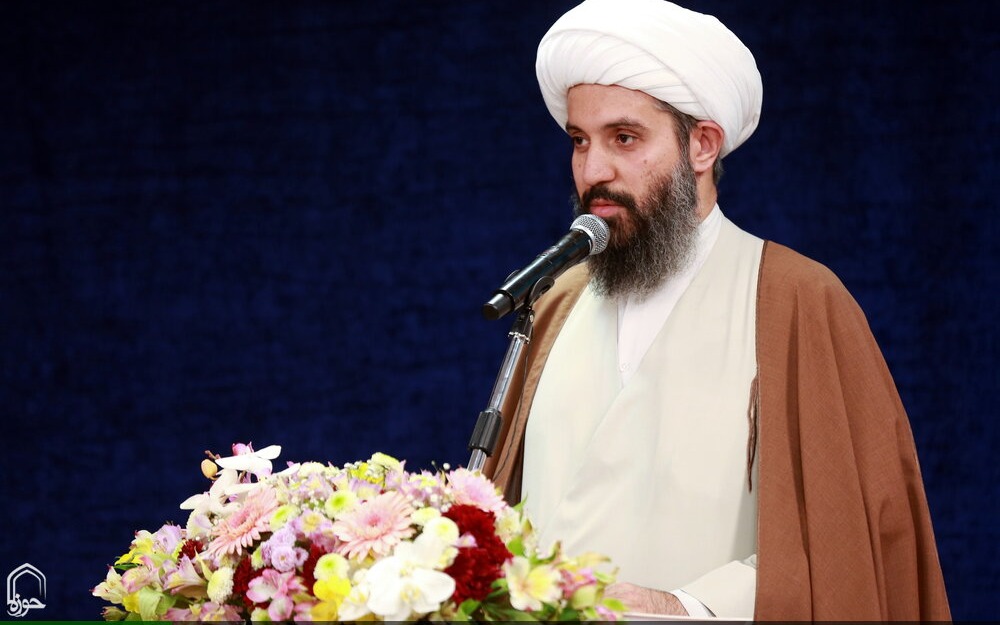
Hojjat al-Islam wal-Muslimeen Ethna-Ashari: scholarly works left behind great scholars are considered a precious treasure for contemporary Islamic Fiqh
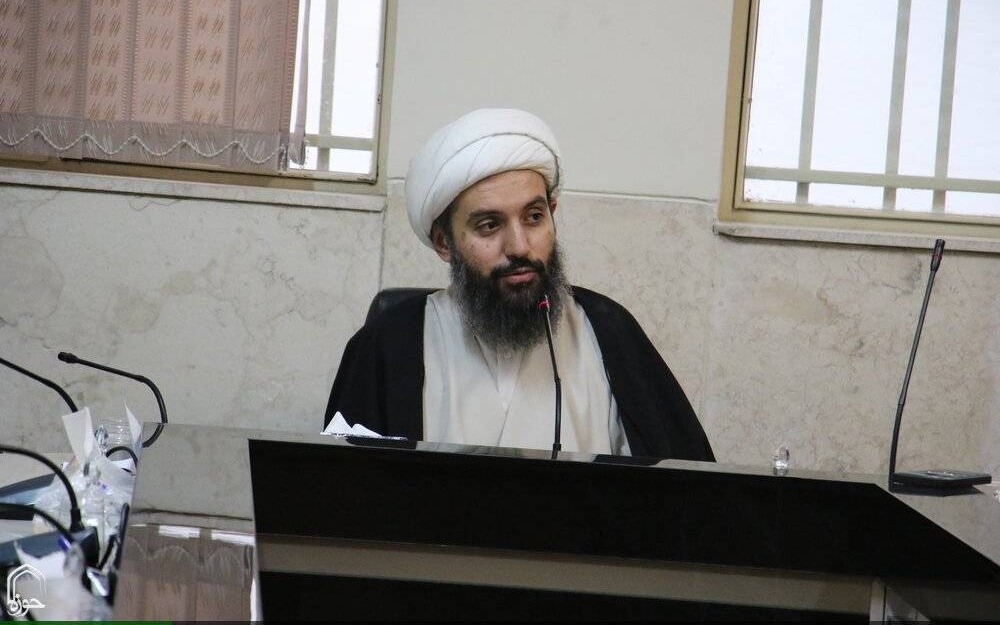
Hawza / Hojjat al-Islam wal-Muslimeen Ethna-Ashari said: Undoubtedly, the scholarly works left behind by Ayatollah Boroujerdi (RA), Imam Khomeini (RA), Ayatollah Haeri (RA), and other great scholars are considered a precious treasure for contemporary Islamic jurisprudence (fiqh).
According to Hawza News Agency, on the 100th anniversary of the establishment of the Qom Seminary, a series of articles and interviews with distinguished figures from the seminary and universities is being published with the aim of enlightening young seminarians and the wider public.
What follows is a brief report from the Fiqh and Usul Group of the Secretariat for the 100th Anniversary of the Establishment of the Qom Seminary, as narrated by Hojjat al-Islam wal-Muslimeen Ethna-Ashari, Director of the Office for Contemporary Jurisprudence (Fiqh) at the Qom Seminary.
In the Name of God, the Merciful, the Beneficent
The Fiqh and Usul Group was one of the most important groups formed within the framework of studying the scholarly developments of the Qom Seminary. The group’s primary responsibility was to examine the distinctive opinions and innovations of prominent jurists of Qom Seminary based on a pre-prepared list of leading scholars.
An important point regarding fiqh is that it is clearly not a science that undergoes fundamental transformations in its theoretical structure or content. Rather, fiqh relies on a thousand-year-old methodology and tradition to address new issues and express opinions about them.
Accordingly, the first step taken by the group was to begin a serious study involving around ten researchers from different levels, ranging from talented young seminarians to renowned professors and experienced researchers.
In this process, in-depth studies were conducted on the jurisprudential and legal-theoretical views of scholars such as the Grand Ayatollah Boroujerdi (RA), Imam Khomeini (RA), Ayatollah Sheikh Morteza Haeri (RA), Ayatollah Damad (RA), and Ayatollah Behjat (RA). We examined both the published articles about these great figures and their original works—mainly in fiqh and usul, and to a limited extent, in rijal studies.
The prominent jurists of Qom, particularly the aforementioned scholars, generally face a shared challenge in the academic environment: very few people specialize in understanding their theories and explaining how these views differ from those of other jurists or mainstream jurisprudential opinions. Therefore, extensive scholarly work was required. Alongside studying the sources, we also benefited from the advice and guidance of academic scholars in order to identify leads and then examine and complete the material.
This research process lasted nearly a year and a half. By God’s grace, five definitive works have so far been prepared, which will be presented in a single volume. There is also the possibility that works concerning some contemporary jurists, whose theories have already been collected, may be added to this collection.
One notable and appealing aspect of this collection is that it has been written concisely, technically, and without unnecessary elaboration. In this work, the opinions of these great scholars are not presented in a broad and general manner; rather, only those parts of their views that were distinctive, innovative, or at least uncommon in their own time have been explained. The goal has been for the unique principles and perspectives of these jurists to become a starting point for new scholarly productions among researchers and seminary students.
For example, Ayatollah Hossein Boroujerdi, contrary to the prevailing view, did not consider verbal indication alone sufficient and emphasized the significance of practical action. Likewise, the late Ruhollah Khomeini presented a highly distinctive and technical interpretation of the narration of Umar ibn Hanzala and its implication for the guardianship of the jurist (Wilāyat al-Faqīh) and Islamic governance. Interestingly, Ayatollah Boroujerdi also accepted that this narration indicates the guardianship of the jurist, though through a different line of reasoning.
Another example concerns the views of Ayatollah Sheikh Morteza Haeri. He is among the jurists who have remained relatively under-recognized in recent years, despite truly being an original thinker and producer of significant jurisprudential scholarship. Unfortunately, his works were published late; some were compiled by his students, and some have not yet even been discussed in advanced jurisprudential classes. Consequently, they have not received sufficient attention from seminary researchers.
We hope this scholarly work will mark the beginning of more serious attention to the lesser-known theories of some of our great jurists—views that deserve greater consideration from seminary scholars and researchers.
Without doubt, the scholarly legacy left behind by Imam Khomeini (RA), Ayatollah Hossein Boroujerdi (RA), Ayatollah Sheikh Morteza Haeri (RA) and other great scholars constitutes a precious treasure for contemporary Islamic jurisprudence.
We ask Almighty God to accept this small effort from us and make it worthy in His sight.
And praise be to God, Lord of the worlds.
Similar news
Comments
0 Comment
Most visited news



Latest articles
Contact us

All rights are reserved for the Center of Contemporary Jurisprudence, Islamic Seminary - Iran - Copyright
۰ Comment