

25 Oct 2022
Islamic Advisory Group Expands Public Health Role
According to the World Health Organization, the Organization of Islamic Cooperation this year hosted a meeting of the Islamic Advisory Group
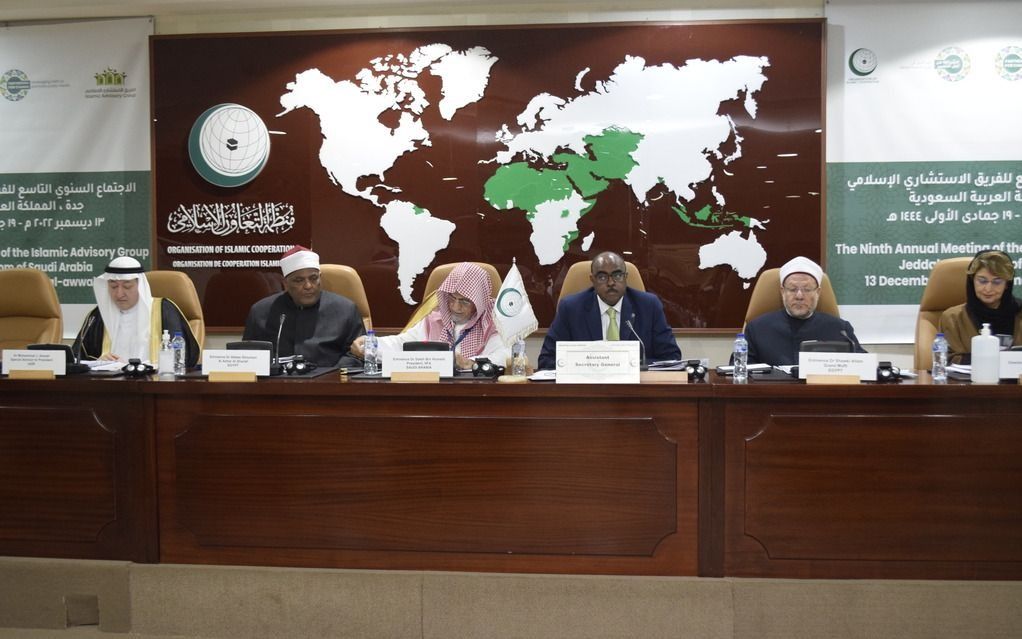
According to the World Health Organization, the Organization of Islamic Cooperation (OIC) this year hosted a meeting of the Islamic Advisory Group (الفريق الاستشاري الإسلامي), with the participation of the International Islamic Fiqh Academy, Al-Azhar University, and the Islamic Development Bank in Jeddah. The meeting was held under the theme “Partnering for Change: The Impact of Religion on Advancing Public Health.”
Dr. Abbas Shoman, former Deputy of Al-Azhar and a member of the Islamic Research Academy, who attended on behalf of the Grand Shaykh of Al-Azhar, noted that Al-Azhar has previously issued numerous fatwas to correct religious misconceptions and widespread rumors regarding polio and other vaccines. He emphasized that expanding the Islamic Advisory Group’s mandate to areas such as maternal, child, and neonatal health is of great importance, and called on the group to also address migrant health. He expressed hope that at next year’s tenth annual meeting, participants would be able to announce the global eradication of polio.
Dr. Saleh bin Abdullah bin Humaid, President of the International Islamic Fiqh Academy and member of the Council of Senior Scholars, reaffirmed his confidence in vaccines, stating that preserving life and health is essential in light of the higher objectives of Islamic law. He praised the constructive partnership and the Islamic Advisory Group’s local consultative teams in Pakistan, Afghanistan, and Somalia for addressing religious misconceptions. He further cited the Qur’anic verse: “...whoever saves a life, it is as if he had saved all mankind” (Surah al-Ma’idah: 32).
Mohammed Jamal Al-Sa’ati, Special Adviser to the President of the Islamic Development Bank Group, who attended on behalf of Dr. Mohammed Al-Jasser, stated that outbreaks such as Ebola and COVID-19 have underscored the pivotal role of religious scholars in raising public awareness and emphasizing the importance of safety measures—such as physical distancing—from the perspective of Islamic fiqh.
Dr. Shawqi Allam, Grand Mufti of Egypt, remarked that religious institutions today are coming together to harness the influence of religion in promoting public health. He stressed that the preservation of life is among the core objectives of the Shariah. “Our model is the Messenger of God (PBUH), who attended to the affairs of society,” he said, citing the Prophetic narration: “Whoever does not concern himself with the affairs of the Muslims is not one of them.”
At the conclusion of the one-day meeting, it was decided that Al-Azhar will host the tenth annual session in Cairo during the second week of December 2023.
It is worth noting that the Islamic Advisory Group is a collaborative body established in 2013 by Al-Azhar, the International Islamic Fiqh Academy, the Organization of Islamic Cooperation, and the Islamic Development Bank. Comprising of religious scholars and technical experts, the group’s primary mission is to address misconceptions that hinder the implementation of public health policies.
Source: Saudi Press Agency
Comments
0 Comment
Most visited news

Latest articles
Contact us

All rights are reserved for the Center of Contemporary Jurisprudence, Islamic Seminary - Iran - Copyright
۰ Comment