

05 Nov 2019
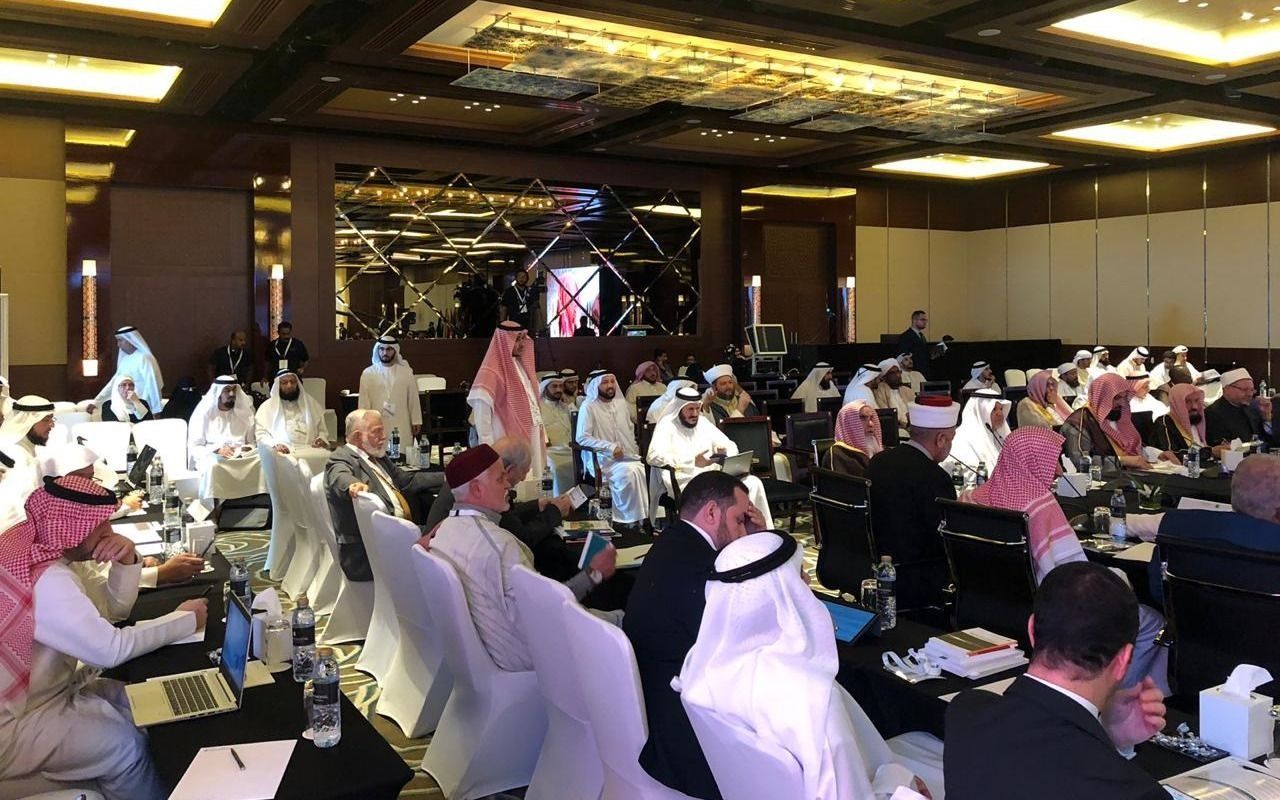
24th Session of the International Islamic Fiqh Academy Dubai
The first day of the conference featured three dedicated sessions on smart contracts exploring innovative contractual models
According to the Emirates News Agency (WAM), the session opened today under the patronage of the Islamic Affairs and Charitable Activities Department (IACAD) of Dubai, with the participation of Sultan bin Saeed Al Mansoori, UAE Minister of Economy and Chairman of the Board of the Dubai Islamic Economy Development Centre, and Dr. Hamad bin Al Sheikh Ahmed Al Shaibani, Director General of IACAD.
The opening ceremony was also attended by Dr. Abdul Salam Dawood Al-Abadi, Secretary General of the International Islamic Fiqh Academy; Dr. Saleh bin Abdullah bin Humaid, President of the Academy; and Dr. Yousef bin Ahmed Al-Othaimeen, Secretary General of the Organization of Islamic Cooperation (OIC), alongside a group of prominent scholars, researchers, and intellectual figures from across the Arab and Islamic worlds.
In his remarks, Dr. Hamad bin Sheikh Ahmed Al Shaibani highlighted the significance of the timing of the conference, noting that it coincides with the anniversary of the establishment of the OIC. He stressed the urgent need to address major jurisprudential issues and future-oriented topics, underscoring the vital role of contemporary Sharīʿa rulings and juristic analysis in advancing the Islamic banking industry.
For his part, Dr. Saleh bin Abdullah bin Humaid, President of the International Islamic Fiqh Academy, emphasized the Academy’s distinguished position in the Islamic world and commended its members and organizers for their efforts in promoting and disseminating Islamic legal knowledge.
Meanwhile, Dr. Yousef bin Ahmed Al-Othaimeen, Secretary General of the OIC, underlined the importance of the Academy’s work, stating that one of the organization’s foremost responsibilities is to strengthen unity among Muslims and to bring their jurisprudential and intellectual approaches closer together in pursuit of religious unity, as well as political and economic solidarity among member states. He added that the Academy was established in response to the pressing need for unity in ijtihād (independent legal reasoning) and fatwā issuance, with the aim of fostering moderation and safeguarding Muslim societies against extremism.
Dr. Al-Othaimeen also addressed the role of modern technology, noting that while it provides new opportunities for religiously committed economic actors, the digital space should not become a source of confusion and division among Muslims through the proliferation of conflicting fatwas and opinions.
At the conclusion of the opening ceremony, and in light of the rapid developments in financial transactions as well as scientific and technological advancements, the first day of the conference featured three dedicated sessions on smart contracts. During these sessions, members explored innovative contractual models designed to facilitate people’s daily lives and professional activities.
The programs of the second and third days are devoted to additional topics, including engineering construction contracts (FIDIC) and the concept of tolerance in Islam. The conference will also address issues related to the human genome, future bioengineering, and the pursuit of food and water security, identified as among the most critical challenges facing Islamic countries today.
Similar news



Comments
0 Comment
Most visited news

Latest articles
Contact us

All rights are reserved for the Center of Contemporary Jurisprudence, Islamic Seminary - Iran - Copyright
۰ Comment